












































































































What it does
Nasty Plot raises the user's Special Attack by two stages: a flat ×2 multiplier applied to every subsequent special move. In Champions' Stat Points system, each stat caps at 32 points with IVs locked at 31 and the level fixed at 50 — your opponent can estimate your damage ceiling before the battle even starts. Nasty Plot tears that estimate up.
A worked number. Take Gengar fully invested in Special Attack at Lv50 — roughly 167 Sp. Atk. After one Nasty Plot that becomes 334. Add STAB ×1.5 on a Ghost move and the effective attack value is around 501. Against a target with ~120 Sp. Def and around 140 HP (approximating standard Cresselia investment), Gengar went from roughly 60% damage to a clean knockout. More importantly: the entire class of Pokémon that could "tank one hit and pivot out" loses that option entirely. That's the mechanical shift — not just more damage, but the collapse of a whole defensive strategy.
One calibration note for doubles: spread moves (Heat Wave, Dazzling Gleam) hit at ×0.75 in doubles. Post-Nasty Plot spread damage lands at roughly 1.5× the unboosted single-target equivalent — still very strong, but not ×2. Keep the actual number in your head when predicting whether a spread move will KO.
Who runs it
Good Nasty Plot users have at least two of three things: high base Special Attack, wide coverage, or a built-in way to protect the setup turn.
Gengar: Speed 110 means it acts before most switch-ins. Ghost/Poison typing is immune to Normal and Ground, which covers two of the most common contact attack types, giving it natural setup angles whenever opponents switch. Ghost/Fighting/Poison/Dark coverage leaves almost no defensive gaps. With Omni Ring triggering Mega Evolution, Special Attack jumps from 130 to 170 — stacked with one Nasty Plot, the working value is 340, and virtually no mid-tier Sp. Def survives it.
Enamorus: Fairy/Flying typing is immune to Earthquake, which removes one of the most common spread-damage tools Ground and Fighting physical attackers rely on. That immunity directly blocks the most common "switch in and threaten" responses, carving out Nasty Plot windows. Fairy STAB hits Dragon and Dark types hard; add Flying and Ice coverage and you reach most of the format.
Iron Valiant: Fairy/Fighting, among the fastest in the format. The coverage trio of Moonblast / Focus Blast / Shadow Ball cuts through almost every defensive typing combination. After one Nasty Plot, anything with neutral or weak Sp. Def is in KO range. It relies on Speed — faster means plot-then-attack on the same sequence; slower means manufacturing the switch gap first.
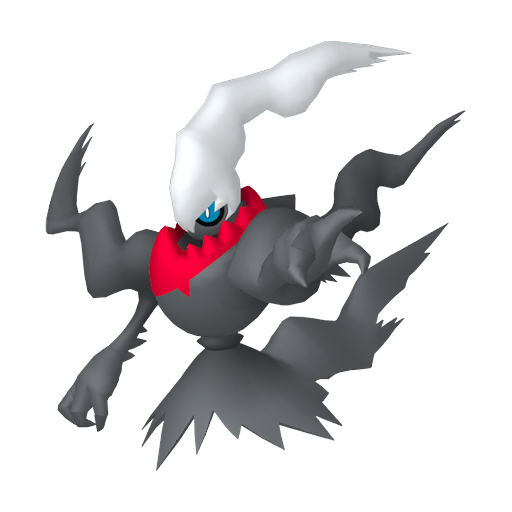
Darkrai: the classic line is pairing Bad Dreams with sleep to force the setup window. Champions sleep cap is 3 turns — not indefinite — so your opponent isn't helpless, but 3 turns is enough for a fast Pokémon to plot and fire two attacks. Dark Void isn't 100% accurate; treat it as probability upside, not a guaranteed lock.
Volcarona: Bug/Fire, Flame Body discourages contact moves (30% burn on touch), which passively reduces how aggressively opponents play into it physically. Standard singles line: force a switch with a physical attacker, pivot Volcarona in on the switch turn and use Nasty Plot, then sweep with Flamethrower / Bug Buzz / Giga Drain next turn.
How to use it
The real problem is manufacturing the turn, not clicking the move.
Singles standard line: apply pressure with a threatening Pokémon to force a switch. The opponent's switch turn is an output-free turn for them. Pivot your Nasty Plot user in and set up immediately. Critical condition: you need to either outspeed the incoming switch-in or be able to take the landing hit. After the setup, stay in — switching out clears the boost entirely, wasting the investment.
Doubles line A (redirect): run a Follow Me or Rage Powder user alongside — Amoonguss and Clefairy are standard. All attacks redirect to the support Pokémon that turn; your Nasty Plot user sets up for free. Next turn, attack.
Doubles line B (Protect stagger): turn 1, the Nasty Plot Pokémon uses Protect while the partner removes the biggest threat (priority: eliminate Fake Out users first). Turn 2, set up safely. This costs an extra turn but removes the interrupt source rather than just absorbing it.
If-then decision framework: opponent has a Fake Out user still alive → don't plot until the partner has handled it or it's already spent its one use that battle. Opponent has Sucker Punch coverage → after plotting, attack immediately rather than waiting another turn (Sucker Punch only fires when the target uses a damaging move, not a status move, so you're not directly punished mid-setup, but staying on field invites it). Opponent has a clear special wall → confirm you have the coverage to break it before plotting; if not, pivot to a physical attacker instead.
Tips & strategy
Common mistake autopsy: setting up into an active Fake Out user. The typical scenario is Incineroar on the opposing side. Newer players reason that Intimidate drops Attack, not Special Attack, so a Nasty Plot special attacker "doesn't care." The mistake is forgetting that Fake Out — a priority move Incineroar throws on the first turn it's on the field — burns your entire setup turn doing chip damage. You clicked Nasty Plot, flinched, and accomplished nothing. The fix: wait until Incineroar has already used its Fake Out for that battle entry (it can only fire once per switch-in), or have your partner eliminate it first.
Blissey and Cresselia are the structural counters. Blissey's HP plus Special Defense combination means even a ×2 boosted special attack frequently doesn't one-shot it, and it responds with Seismic Toss or Thunder Wave to neutralise the sweep. Cresselia tanks the hit and answers with Moonblast or support moves. Against either, continuing to click special moves post-setup is usually incorrect — pivot to a physical attacker and apply pressure from the other side instead.
Paralysis is a real but calibrated threat. Champions reduces full-stop paralysis chance to 12.5% (down from 25% in mainline games). It doesn't proc every turn, but the Speed halving is particularly brutal for Nasty Plot users: many of them rely on outspeeding to set up and attack in sequence, and halved Speed can flip the turn order and hand initiative back to the opponent. If Thunder Wave is likely on the predicted setup turn, switch rather than walk into it.
The Mega Evolution + Nasty Plot threat profile. When opponents see a Pokémon carrying Omni Ring in Team Preview — especially one with a Mega form that pushes Special Attack significantly higher — they must allocate dedicated counterplay resources before team-select ends. If they don't, and the setup lands, no neutral switch-in survives the follow-up. This is a team-building pressure, not just an in-battle one: opponents may be forced to carry a special wall they wouldn't otherwise want, which shapes the rest of the team matchup in your favour.