


















What it does
Leftovers restores 1/16 of the holder's maximum HP at the end of each turn. No PP, no trigger, no weather requirement. It just runs.
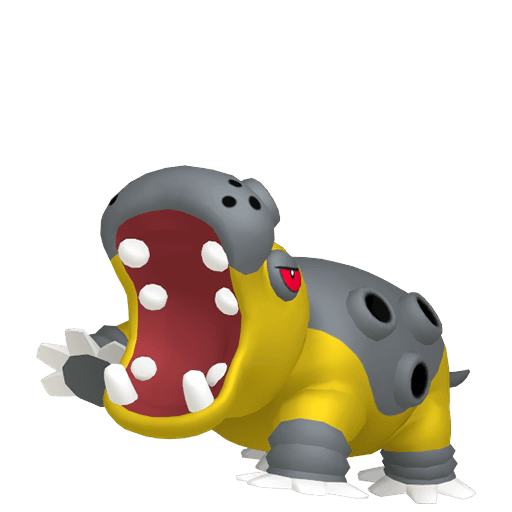
The numbers that matter. A bulky Hippowdon in Champions sits around 175 HP at Lv50. Every turn, Leftovers hands back roughly 11 HP. Over six turns that's 66 HP recovered — enough to absorb a resisted hit from scratch. More importantly, consider KO probability: damage in Champions runs 85–100% in 16 discrete steps. If an opponent's expected damage is 160 and you're sitting at 168 HP, roughly half those damage rolls kill you outright. But if Leftovers healed you 11 HP last turn and you're at 179, every single roll misses the KO. One item, one turn, completely erased the threat.
Six turns of recovery totals exactly 37.5% max HP (6 × 1/16). That beats Sitrus Berry's one-time 25% — and asks nothing of you in return. Sitrus Berry's only advantage is immediacy: it fires fast, which matters on a hit-and-run attacker. Leftovers wins every time the Pokémon stays on the field.
Champions' Stat Points cap (66 total, 32 per stat) means HP pools are compressed compared to what 252 EV investment would build in mainline games. Thinner absolute HP makes each point of recovery worth more at the margin. Leftovers is quietly stronger here than it looks on paper.
Who runs it
Toxapex — the definitive stall wall. Baneful Bunker plus Recover already drains opponent resources turn by turn; Leftovers layers on top and makes every turn the opponent spends not killing it a losing trade. Also worth considering Black Sludge here — see Tips section — but Leftovers is the safer pick on mixed teams.
Ferrothorn — has no recovery move of its own. Leftovers is its only way to recoup the Iron Barbs chip damage it takes every contact hit. The loop: attacker loses HP to Iron Barbs, Ferrothorn recovers HP from Leftovers, attacker nets negative on every physical exchange. That's the wall working as designed.
Blissey — the largest HP pool in the game means the largest absolute recovery per turn. 1/16 of an enormous number is still an enormous number. In singles attrition, it becomes nearly impossible to wear down without a dedicated item-removal answer.
Cresselia — doubles' clearest Leftovers poster child. Its job is not to deal damage; it's to outlast. Leftovers plus Protect cycling keeps it healthy enough to fire off a late-game Lunar Dance when it matters most. Every extra turn it buys is value.
Amoonguss — the Rage Powder redirector in doubles soaks hits that were meant for teammates. Leftovers patches that chip damage back between turns. In Champions, Sleep caps at 3 turns — shorter than mainline — so the timing of Spore matters more. Staying alive longer means waiting for a better window to land it.
Substitute users (Heatran and similar) — Substitute costs 1/4 HP; across four turns, Leftovers returns 4 × 1/16 = 1/4 HP. The net HP cost of one sub cycle is literally zero if nothing breaks the sub and you take no other damage. In practice the sub does get hit, but the math shows why the loop stays profitable much longer than intuition suggests.
How to use it
Singles: count the opponent's KO number first. If they two-shot you regardless, Leftovers does nothing — pick Focus Sash or an offensive item. If they need three hits, the second hit leaves you higher and the third might not be clean. If they need four, Leftovers is actively changing the math every single turn. The decision rule is simple: what's their KO count on you?
Substitute loop turn pattern:
- Turn 1: use Substitute (−1/4 HP), Leftovers fires (+1/16)
- Turn 2: use your attack or Toxic, opponent hits the sub, Leftovers fires (+1/16)
- Turn 3: sub breaks, Leftovers fires (+1/16)
- Turn 4: rebuild sub (−1/4 HP), Leftovers fires (+1/16)
Net HP cost across 4 turns = 1/4 − 4 × (1/16) = 0. In a vacuum, the loop sustains itself indefinitely. Real battles involve direct hits too, but this math explains why the cycle drains far slower than it feels from the opponent's side.
Doubles Protect cycling: Protect turn = no damage taken + 1/16 recovered. Attack turn = hit taken from a healthier HP pool. Across any two-turn window you're always ahead compared to no Leftovers. For Amoonguss and Cresselia, this cycle is their primary sustain mechanism — and it compounds over a full match.
Singles vs doubles key difference: Singles gives you more turns for recovery to accumulate; Leftovers' long-term value is easier to realize there. Doubles is faster and more concentrated — your core Pokémon can be focus-fired down before recovery matters. In doubles, Leftovers needs Protect support to pay off. Don't rely on it to tank a spread hit and then recover; rely on it to top up between safe turns.
Tips & strategy
Black Sludge swap for Poison types: Toxapex and Amoonguss should seriously consider Black Sludge over Leftovers. The holder recovers identical 1/16 HP per turn — but if an opponent steals it with Trick or Switcheroo, the non-Poison recipient takes 1/8 HP damage per turn instead. That's a built-in trap at no cost to you. The one caveat: make sure no non-Poison teammate can accidentally pick it up through a doubled Trick situation.
Four ways to beat Leftovers:
- Knock Off: deals 1.5× damage to a Pokémon holding an item AND strips it in one move. Best single answer in the game to Leftovers.
- Trick / Switcheroo: swap the Leftovers away, usually replacing it with a Choice Scarf or similar liability.
- Leech Seed: drains 1/8 HP per turn — twice the rate Leftovers recovers. The wall still bleeds net negative every turn.
- Speed-kill: secure the KO in two turns and Leftovers never accumulates enough to matter.
Common mistake — giving Leftovers to a sweeper. Leftovers is a long-game tool; it needs turns on the field to pay off. A fast, hit-and-run attacker switches in, hits once or twice, and leaves. That's maybe one or two Leftovers procs at best — negligible. Choice Band, Choice Specs, or Life Orb convert that same item slot into immediate extra damage every hit. Beginners hold onto Leftovers because it "sounds safe," but on the wrong Pokémon it's just a wasted slot.
Named exception — Mega Evolution candidates: Once a Pokémon triggers Mega Evolution through the Omni Ring, it must hold its Mega Stone — the item slot is taken. Leftovers cannot coexist with a Mega Stone on the same Pokémon. The one or two pre-evolution turns where Leftovers would theoretically fire generate almost no meaningful recovery. Bring the Mega Stone from turn one. Don't try to squeeze a few turns of recovery before evolving — by the time it adds up to anything, you've already evolved and lost access to it anyway.