












What it does
Choice Scarf multiplies the holder's Speed by 1.5 and locks it into one move until it switches out. That sounds like two simple lines, but the math has real competitive weight.
Here's the number that matters. A Pokémon with base 100 Speed, a Speed-boosting Stat Alignment, and 32 Stat Points in Speed reaches roughly 167 Speed at Lv50. Multiply by 1.5: ~250. That number outruns basically every standard attacker in Regulation A without any setup turn — Garchomp at base 102, Gengar at base 110, even Weavile at base 125 fall below it if they're not Scarfed themselves. You don't spend a turn on Tailwind, you don't need Thunder Wave to land — equip the Scarf and the Speed tier shifts immediately.
Compare this to Life Orb: Life Orb adds ×1.3 to attack damage in exchange for losing 10% of your max HP per move. It makes you hit harder. Scarf makes you hit first. Acting first matters more than hitting harder in most positions, because the faster side gets to react before the slower one can. The cost of Scarf is flexibility, not HP — but a locked move against the right resistance is a wasted turn, and a wasted turn in a singles game is a real tempo loss.
Damage in Champions rolls from 85% to 100% in 16 discrete steps, meaning knockouts are probabilistic — but Scarf mistakes aren't damage failures, they're rhythm failures. If your locked move hits something that resists it, you didn't just deal less damage; you contributed nothing and left your Pokémon in an exposed position.
Who runs it
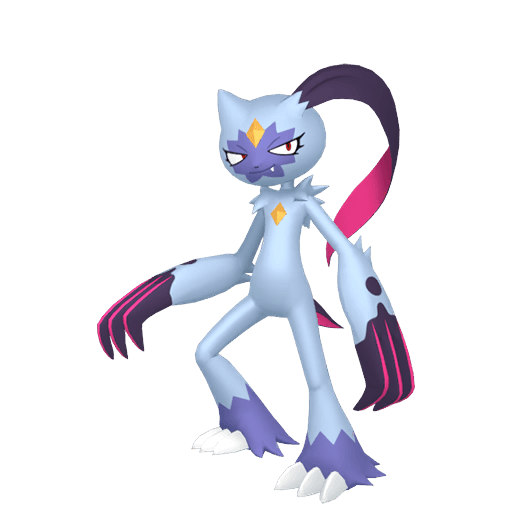
Weavile (base Speed 125, Ice/Dark) is the textbook Scarf user. Its base Speed is already strong, and Scarf pushes it to roughly 221–250 (depending on Stat Alignment) — a tier that outruns virtually every common attacker. More importantly, its offensive tools are concentrated: Icicle Crash covers Dragon, Ground, and Flying; Night Slash covers Ghost and Psychic. Two moves cover most of what it needs to hit. The rest of its moveset is situational at best, which fits the Scarf philosophy exactly — you want a narrow, high-impact pool so the locked-move penalty costs you almost nothing in practice.
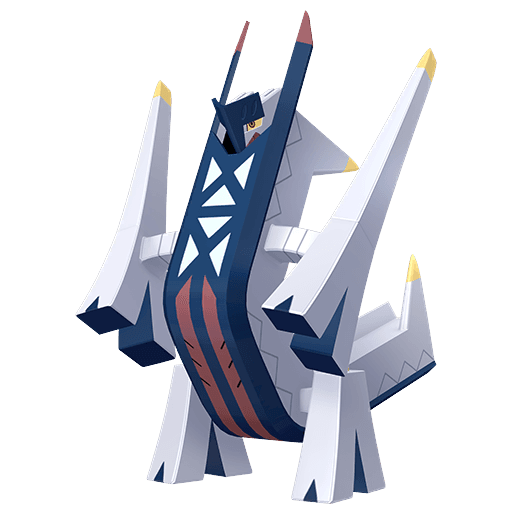
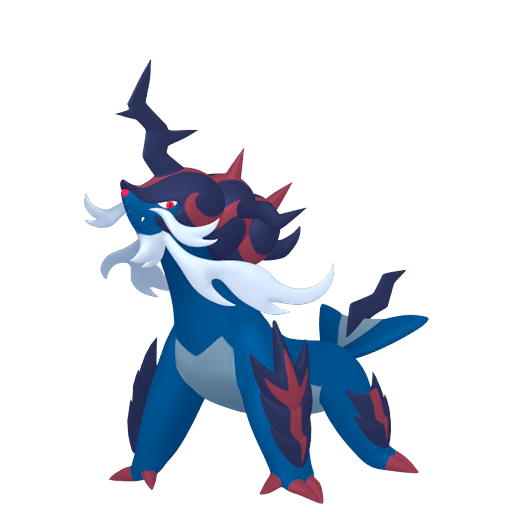
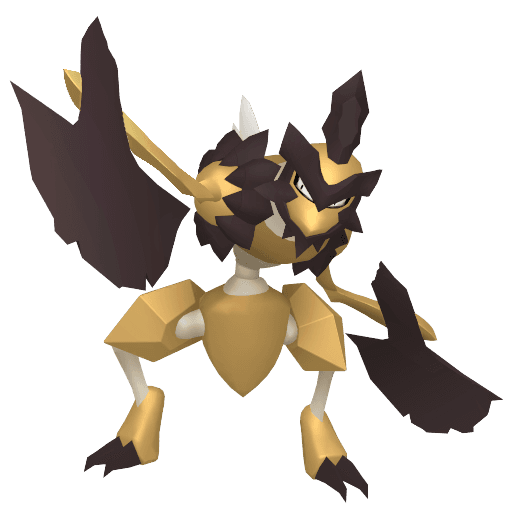
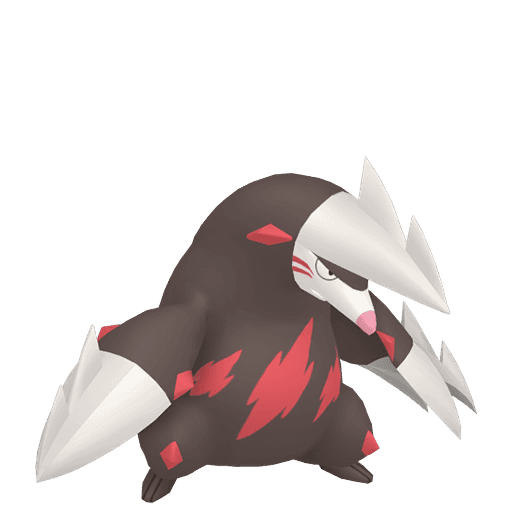
Urshifu-Single Strike (base Speed 97, Fighting/Dark) is the premier singles revenge killer with Scarf. Wicked Blow always crits, bypassing any Defense boosts the target has set up — that predictability is exactly what you need for revenge killing, because you can calculate whether you'll knock out the target with confidence. At 97 base Speed with Scarf (roughly 218 with a boosting Stat Alignment), Urshifu outpaces a large chunk of mid-fast attackers. The workflow: opponent's attacker KOs your partner → switch to Urshifu → outspeed → Wicked Blow cleans up. No variable crits to hope for, no defense thresholds to worry about.
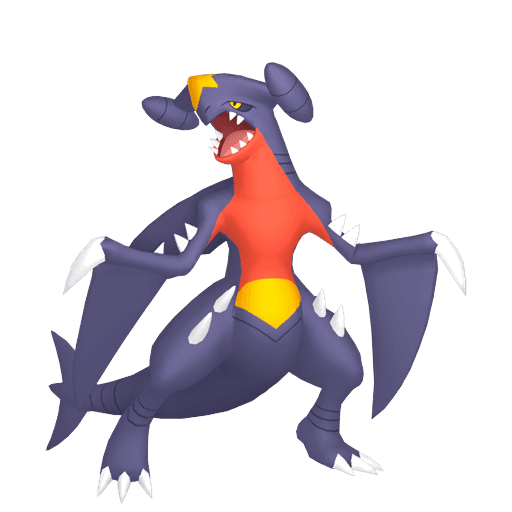
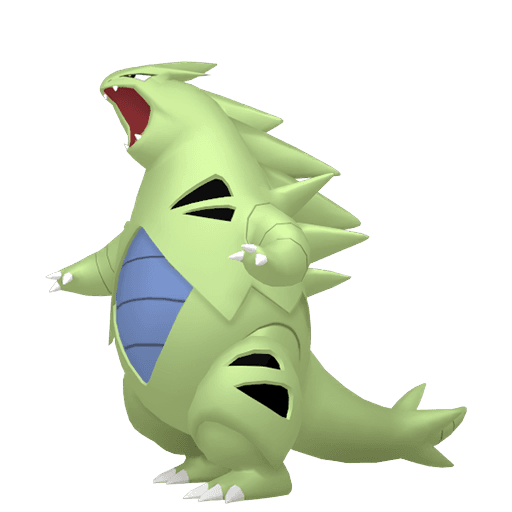
Garchomp (base Speed 102, Dragon/Ground) is the sweep-cleaner archetype. Scarf brings it to roughly 229 with full Speed investment, covering an enormous Speed tier. Outrage locking in looks risky, but the key decision point is: does this match still require flexibility? If Garchomp's role for the remaining turns is to remove a specific threat and you've already confirmed the opponent has nothing to safely pivot into, Outrage with Scarf is the cleanest answer. The damage output justifies the lock when the targeting is deliberate.
Gengar (base Speed 110, Ghost/Poison) is the special attacker angle. Base 110 isn't slow, but certain mid-high Speed threats would otherwise outpace it. Scarf flips that. Shadow Ball into Sludge Bomb with Scarf gives it enough coverage to threaten two or three key knockouts in a match, and Gengar rarely needs its other moves in practice. One important caveat: Gengar's physical Defense is very low. The switch-in timing for revenge kills must be precise — don't let it eat a stray physical move.
Mega Evolution users can't run Scarf — the Mega Stone takes the held item slot. And after Mega Evolution activates, the stat jumps are large enough that adding more Speed usually isn't the priority anyway.
How to use it
Lock in the Scarf's targets during Team Preview. Before the first turn, answer two questions: which opponent does your Scarfer now outspeed that it couldn't before? And which opponent, if it starts racking up KOs, is the designated revenge kill target?
The Scarfer often shouldn't lead. Let other Pokémon establish the game state and identify the opponent's gameplan. When the right target appears on field, pivot to the Scarfer. Switching in on a predicted attack is the ideal entry — you arrive healthy and go first next turn.
The classic singles turn chain:
Turn 1: Opponent's attacker KOs your partner. You're in the switch window. Turn 2: You switch in the Scarfer. Opponent will either attack again or switch out. Turn 3: If they stay, you outspeed and KO. If they switched to a resistance, your locked move hits for little or nothing.
Everything pivots on Turn 2's read: will they stay or switch? If they have a hard counter to your locked move in their party and they're a player who reads ahead, they'll swap. If they don't have a clean pivot or they're expecting you to bring something else, they'll stay. No formula resolves this — it comes from watching what's left in their roster during team preview and tracking patterns in play.
In doubles, Scarf roles shift toward disruption rather than primary damage. A common setup: teammate uses Fake Out to block the opponent's faster Pokémon for one turn, while the Scarfer attacks the other target unimpeded. This effectively buys you a Priority window without spending a turn on Speed control. The Scarfer's job here is to threaten specific knockouts fast, not sustain across many turns.
Always have a pre-planned response for when the Scarfer is locked into a bad move. Either take the hit and switch out, or use Protect (if it's on the set) to stall for a turn while you reassess. Making this decision mid-game, under pressure, produces worse outcomes than having mapped it out in team preview.
Tips & strategy
The most common beginner mistake: committing to a revenge kill without checking the damage. The scenario: opponent's attacker just KOs your partner, you bring in the Scarfer and click the attack — the target survives, then either knocks out your Scarfer or heavily damages it. The root cause is "felt like it should knock out" without actual calculation. The fix: in team preview, rough-estimate whether your Scarfer's move at its minimum roll (85%) clears the target's HP. When you can't be sure, prioritize moves with stable damage (Wicked Blow's guaranteed crit is exactly this property) over high-variance options.
Trick Room is the hardest counter Scarf has. Trick Room reverses turn order — slower Pokémon move first. Your Speed advantage flips into a liability; you'll move after Pokémon you'd normally outpace. The response: identify Trick Room setters in team preview (Hatterene, Dusclops, etc.) and either threaten them before the field flips with your Scarfer's Speed, or bench the Scarf for those turns and bring in something that benefits from reversed order.
Paralysis cuts Scarf in half — literally. The paralysis Speed penalty is still 50% in Champions (only the flinch rate dropped from 25% to 12.5%). A Thunder Wave hitting your Scarfer halves its Speed immediately. A Pokémon that was sitting at 250 Speed drops to 125 — no longer outspeeding the threats it was built to handle. Watch for paralysis support in opponent rosters and avoid leaving the Scarfer in line for status moves.
The locked move leaks information — turn that into bait. Once you've clicked a move, the opponent knows you're locked. They'll pivot to a resistance. But switching takes a turn on their side too. If your Scarf Weavile used Icicle Crash and the opponent switches in a Steel type, you can use that turn to swap to your own Fighting-type attacker. Both sides switched — but you traded the Icicle Crash turn for a favorable pivot. Passivity forced by the lock can become active positioning if you anticipate it.
Knock Off removes the gameplan entirely. Once your Scarf is knocked off, the Speed boost is gone for the rest of the match and the Pokémon's role collapses. Don't pivot a Scarfer into anything that carries Knock Off without accounting for it.