






What it does
Air Balloon gives the holder Ground-type immunity equivalent to Levitate, until any direct hit breaks it. "Direct hit" is the key phrase: weather chip, burn/poison residual, Leech Seed drain, and Stealth Rock entry damage do NOT pop it. But U-turn, Fake Out, Rock Slide — any move that registers as hitting the holder — pops it immediately.
Why the numbers matter: Earthquake has base power 100 with no modifiers. Take Heatran (Fire/Steel, ×4 Ground weakness) as a worked example. Without the balloon, a standard Earthquake from a neutral attacker lands in the ~85–100% damage window — near-certain KO. With the balloon, that same move's hit chance is zero. You are not tanking a hit; the move simply does not connect. That difference is the entire point.
There is one mid-turn wrinkle: if the balloon breaks due to a faster move earlier in the turn, slower Ground-type moves on the same turn still land normally — the immunity ends when the balloon pops. If your Pokémon moves first, breaks the balloon itself via a contact move, and the opponent's Earthquake has not resolved yet, the Ground move will hit. Knowing the speed relationship matters.
Who runs it
Heatran: The textbook case. Fire/Steel means Ground hits for ×4, so Earthquake is practically guaranteed to knock it out. With Air Balloon, you switch Heatran in on a predicted Earthquake, eat zero damage, and immediately fire Magma Storm. The trapping effect of Magma Storm prevents the opponent from switching out, so they are stuck in front of Heatran while the balloon window accomplished its purpose. After the balloon pops, Heatran is still threatened by Ground moves, but by then it has already done its job.
Magnezone: Electric/Steel with no native Ground immunity — no Levitate, no Flying type. Its role is trapping Steel-types via Magnet Pull and dealing damage before they can respond. The problem is that many Steel-types carry Ground coverage specifically to punish Magnezone. The balloon lets it survive that exchange. In doubles, a partner using Discharge benefits from Magnezone's own Electric immunity, and the balloon closes the remaining Ground-move gap.
Incineroar: The defining doubles Intimidate pivot. Its job happens on the turn it switches in: Intimidate fires on entry, weakening the opponent's physical attackers. The threat is that the opponent answers with a Ground move to punish the switch. Air Balloon lets Incineroar switch in, trigger Intimidate, and then use Parting Shot to pivot out — all three steps without Ground moves being a factor. Once that sequence is done, the balloon has served its purpose.
Excadrill: Steel/Ground, so it is already Ground-immune as a Ground type. The value shifts in non-sand teams: without Sand Rush, its Speed is middling, and it sits in a crowded speed tier. Balloon on Excadrill creates a psychological ambiguity — the opponent does not immediately know whether to use Ground moves — while Excadrill freely uses Iron Head or Rapid Spin to complete its role.
How to use it
Singles: The balloon's value is front-loaded. You read an Earthquake coming during Team Preview or mid-game, switch in the balloon holder, and use that free turn to set Stealth Rock, use a setup move, or deal meaningful damage. The critical decision is: what does the balloon holder accomplish in that one window? The balloon is not a recurring benefit — once it pops you are playing normally again. Have a concrete answer to "and then what?"
The counter-play the opponent can run: ignore the Ground move entirely and break the balloon with any neutral hit first, then follow with the Ground move next turn. This two-turn sequence bypasses the immunity at no real cost to them. The more experienced the opponent, the more likely they will do this rather than blindly click Earthquake into your balloon.
Doubles: The canonical use is "ally uses Earthquake, balloon holder does not take the spread damage." This converts a spread Ground move into a de facto single-target attack on the opponent's side. The setup is real and powerful. The risk is that the opponent can use any spread move — Rock Slide, Heat Wave — to pop the balloon as a side effect of their normal attack sequence, stripping the immunity before the important Ground exchange arrives. During Team Preview, look for whether the opponent has a spread-damage option that would pop the balloon incidentally.
Tips & strategy
Timing: earlier is almost always better. Mid-game, a savvy opponent will spend one turn breaking the balloon with any convenient move, then use the Ground attack on the following turn. The balloon has no "save it for later" value — it is worth exactly as much as the one Ground immunity it provides, and that value peaks at turn one or on the first critical switch.
The most common beginner mistake is bringing Air Balloon when the opponent has no Ground-type attackers at all. This wastes an entire item slot on a defensive property that never activates. Air Balloon's value is entirely conditional on the opponent having Ground-type offense. Leftovers provides consistent recovery every turn; Assault Vest meaningfully boosts special bulk unconditionally. Without a Ground threat in the opponent's roster, either of those will outperform a balloon that never pops. Make checking the opponent's Ground coverage a habit during Team Preview.
What breaks the balloon:
- Knock Off is the hardest counter. It removes the item before calculating damage, meaning the Ground immunity disappears at item-removal time — but Knock Off itself is not a Ground move, so it connects regardless. It also receives a 1.5× bonus when the target holds an item, so it simultaneously strips the balloon and deals elevated damage in one move.
- Trick and Switcheroo force an item swap, sending the balloon somewhere it does not belong and leaving the original holder with junk.
- Spread moves in doubles (Rock Slide, Heat Wave) pop the balloon as a side effect of hitting the holder — the most common incidental break pattern in doubles play.
What does NOT break the balloon:
Entry hazards like Stealth Rock and Spikes (not hits), weather chip, burn damage, poison damage, and Leech Seed drain — none of these trigger the balloon. There is no way to pop it through residual damage alone; it requires a direct hit.
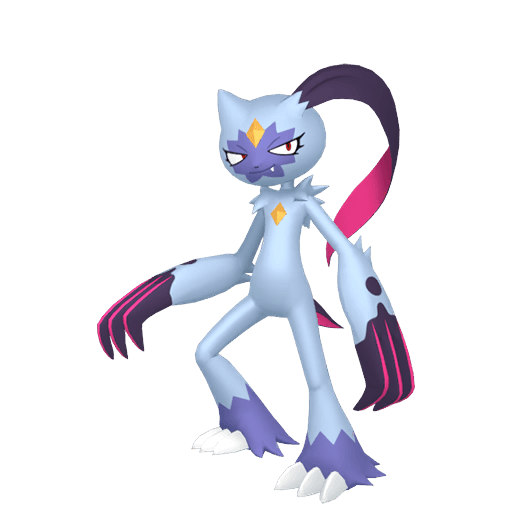
Named exception — Knock Off as anti-balloon tech: Dedicated Knock Off users (Incineroar, Weavile) can be brought specifically to dismantle balloon-dependent strategies. If your team relies on a balloon holder as its primary Ground answer, your opponent may bring a Dark-type attacker not for their typing advantage but specifically to strip the item and expose the weakness.
Stat Points note: if Air Balloon covers a Ground weakness that would otherwise require heavy Defense investment, those freed-up Stat Points can be reallocated toward Speed or Sp. Def to reach thresholds that actually change matchup outcomes.