



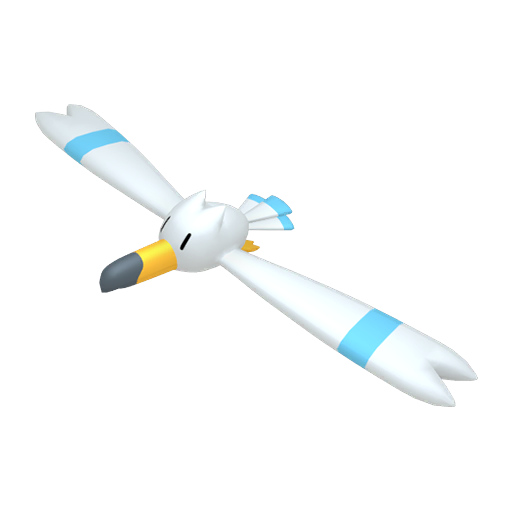
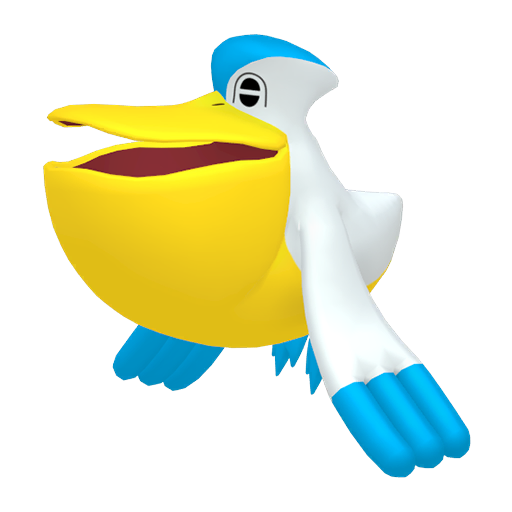



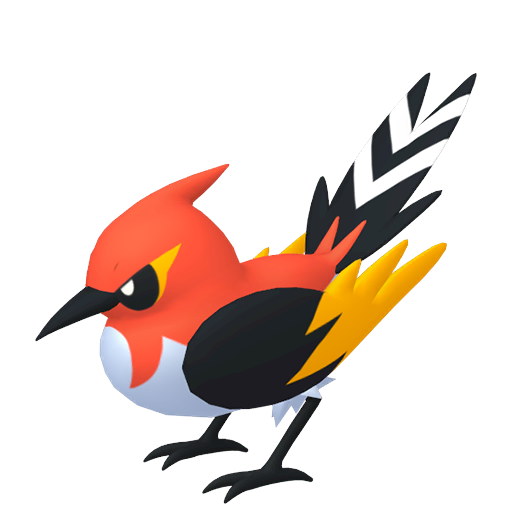



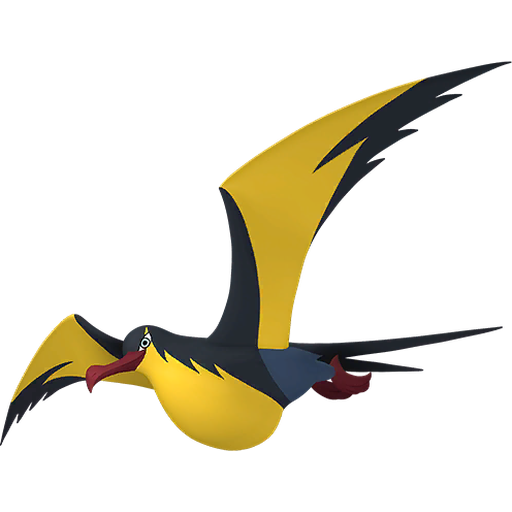


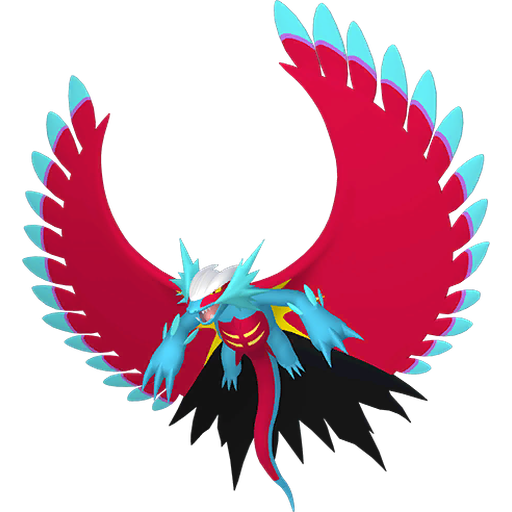
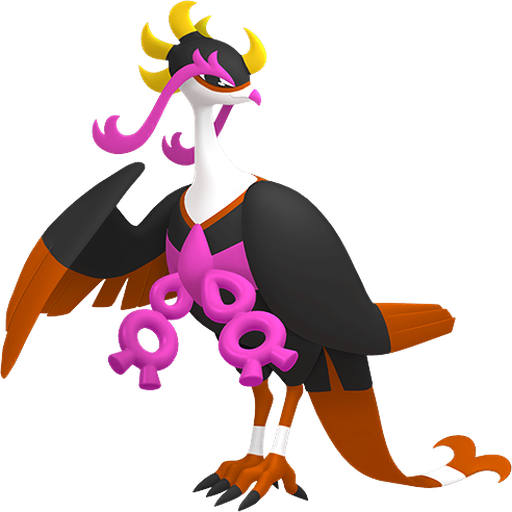







What it does
Roost restores 50% of the user's max HP — no item cost, no weather. The mechanic sounds simple, but one secondary effect shapes every single use: the user loses its Flying typing for the turn Roost is used.
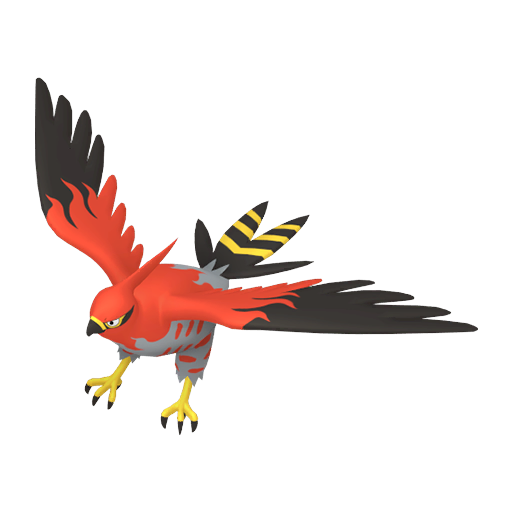
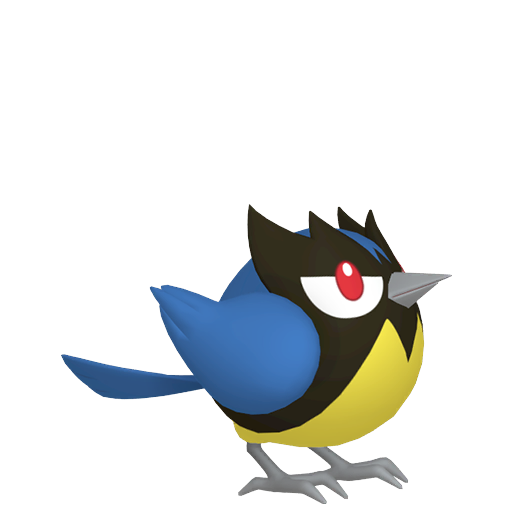
A pure Flying-type becomes typeless for that turn. A Flying-secondary Pokémon like Corviknight (Steel/Flying) or Talonflame (Fire/Flying) drops to its primary type only — Steel or Fire, Flying gone.
Three type relationships shift immediately:
- Ground immunity removed. Corviknight is normally Ground-immune. Roost turn: Earthquake connects at standard effectiveness against pure Steel.
- Electric weakness removed. Flying's 2× Electric weakness disappears for that turn; the primary type governs instead.
- Ice weakness removed. Moves that hit Flying at 2× now land neutral.
That Ground exposure carries real numbers. A Corviknight with defensive Stat Points investment sits around 160–170 HP at Lv50. A Garchomp's Earthquake against pure Steel often deals 50% or more — meaning the turn you Roost is the turn an unrevealed EQ can halve your HP or outright knock you out, erasing any recovery you just got.
In Champions, Stat Points total 66 with a 32-per-stat cap. Many Flying-types push their limited points into Speed or offenses and rely on Roost to patch the resulting defensive shortfall. When Roost gets blocked, that entire survival plan collapses.
Who runs it
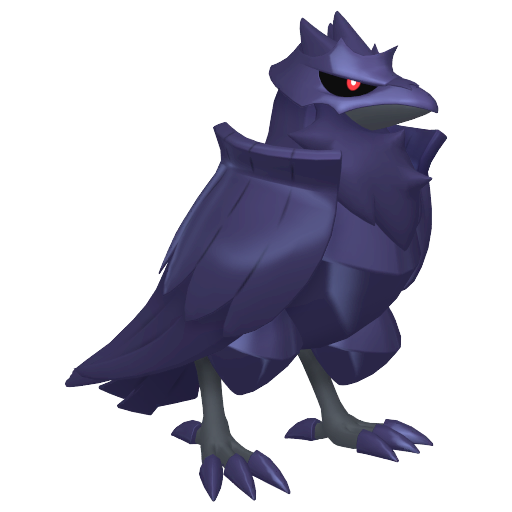
Corviknight — the textbook physical wall Steel/Flying, Pressure drains the opponent's PP, Defog keeps entry hazards off the field, Roost keeps it standing indefinitely. It doesn't aim for clean KOs — it outlives the opponent's resources. Stat points go heavy into Defense and HP; Roost fills whatever gap remains. In singles, Roost is non-negotiable on virtually every set.
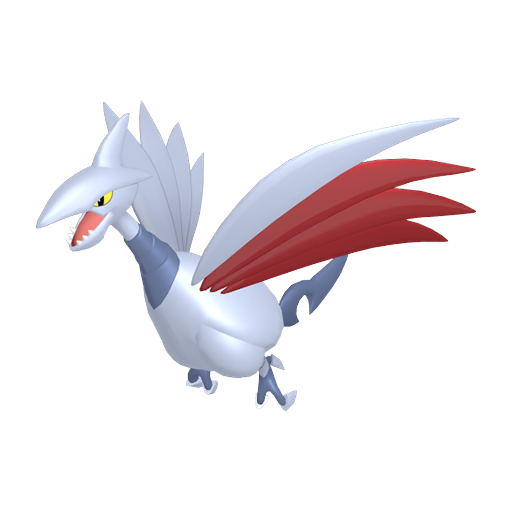
Skarmory — hazard setter plus self-sustain Same general role as Corviknight, but adds Spikes to the kit. The rhythm: lay Spikes, Roost to outlast the opponent's removal attempts, force them to bring Defog or Rapid Spin — which itself becomes a Roost window while they're removing instead of attacking.
Dragonite — buying time before Dragon Dance The classic Dragonite plan is Dragon Dance then sweep, but Stealth Rock chip (12.5% per switch at neutral) eats into that plan fast. A Dragonite that entered twice has already lost 25% HP before a single DD. Roost during a safe turn banks that health back. The key decision is: opponent switches → this turn, Roost or DD? If you're below 60% HP and face no immediate threat, Roost first. If a type-advantage target just switched in, click DD — seizing momentum beats patching HP.
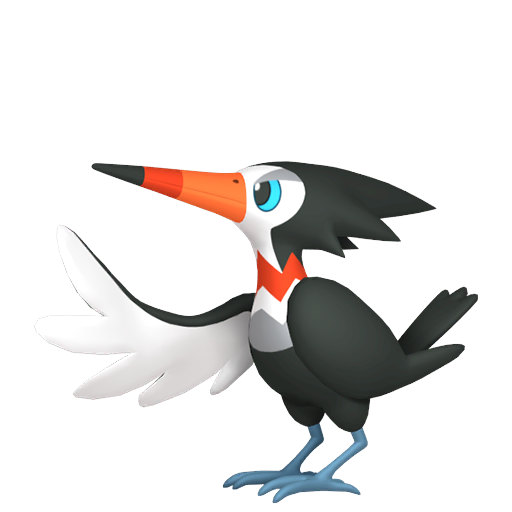
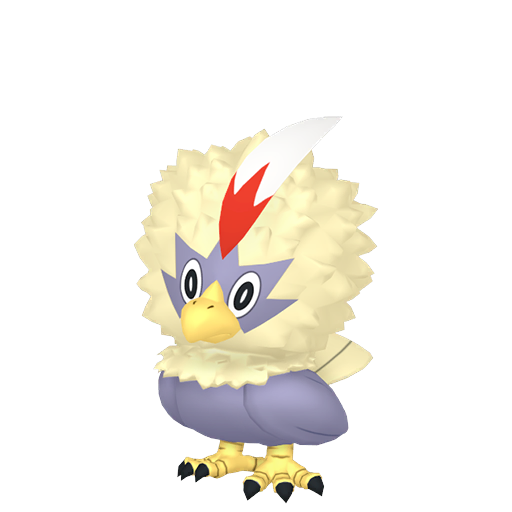
Talonflame — erasing recoil accumulation Brave Bird has +1 priority and lets Talonflame attack before almost anything, but the 1/3 recoil stacks fast — three hits costs roughly 30% HP in self-damage. Roost mid-game clears that accumulation so the priority loop stays active. Pattern: two Brave Birds → spot a switch window → Roost → resume priority offense.
Scizor (Mega form) — long-game anchor Mega Scizor via Omni Ring with Scizorite triggers Mega Evolution, turning Technician-boosted Bullet Punch into a reliable priority tool. It wins through sustained chip, not burst — Roost fits perfectly, keeping it healthy when the opponent can't one-shot it. In doubles it often eats focus fire while a partner acts freely; Roost behind Follow Me support makes it a legitimate anchor.
How to use it
The free-switch turn is your Roost window When the opponent switches, you take no damage that turn. That is the default Roost timing — free recovery without surrendering an attack. If you read the switch correctly, the loop builds: opponent switches in → you Roost → they either attack or switch again → repeat until you're full. Each time they switch out of pressure, you gain HP.
Calculating whether recovery wins A 160-HP Pokémon Roosting recovers 80 HP. If the opponent deals 70 damage per turn, Roosting every other turn keeps you ahead — net +10 HP per two-turn cycle, sustainable indefinitely. If they deal 90+ per turn, Roost only slows the inevitable — you need to threaten them off the field, not just heal through it. Run this math in your head before committing to a stall plan.
Singles vs doubles In singles, switch turns are plentiful and Roost fires constantly. Defensive pivots use it every few turns as a matter of routine; setup sweepers click it situationally before their offensive push. In doubles, two attackers pressure you simultaneously, genuinely safe turns are rare, and Roost typically only fires when a partner is absorbing all attacks via Follow Me or Rage Powder, or when neither opponent can threaten you that turn. Don't force Roost in doubles — that turn is a wasted action if you're not actually safe.
Decision tree before clicking Roost Ask two questions: does the opponent have a Ground-type attacker that hasn't used Earthquake yet? Is there any move they've been holding back? If either answer is uncertain, wait for a cleaner window. The cost of a misread Roost isn't just wasted HP — it can be the KO that loses the game.
Tips & strategy
The most common mistake: waiting until low HP New players wait until HP drops below 25–30% before Roosting. At that point, the opponent likely has a guaranteed KO next turn — Roost becomes a gift of a free turn with no payoff. The correct threshold is around 55–60% HP: you still have room to survive a hit if you misread the timing, and you're building the buffer before it's critical. Roosting at 20% HP against a live attacker with a finishing move ready is almost always a mistake.
The Earthquake trap — opponents holding Ground moves for your Roost A high-skill opponent with a Garchomp or Landorus-T will sometimes avoid clicking Earthquake for multiple turns, using weaker moves against your Corviknight instead. They are waiting specifically for your Roost turn. The counter: use U-turn to pivot out and force them to either click EQ into your replacement or give up the threat, then switch Corviknight back in for a safe Roost later.
Taunt — the direct shutdown Taunt blocks all non-damaging moves, which includes Roost. In Champions, Taunt lasts 3 turns. If your Roost Pokémon is Taunted, the entire recovery plan is dead for three turns. Teams built around Roost sustain must account for this: carry U-turn as an escape hatch, or keep a team member that punishes Taunt users with immediate damage. Corviknight can run Body Press specifically to remain threatening while Taunted.
The exception that flips the usual rule: resisting into a free Roost If the opponent clicks a move your Pokémon resists heavily (0.25× or outright immune — say, a Fire move into a Water-type partner redirect, or a move you absorb via an immunity), the incoming damage is negligible regardless of Flying-type removal. Roost freely. You're trading their wasted attack for 50% HP recovery, which is one of the highest-value single turns available in the game.
Status in Champions doesn't stop Roost reliably Champions adjusted status conditions significantly: Paralysis blocks action only 12.5% of the time (Speed is still halved — that half still matters), Sleep caps at 3 turns, Freeze auto-thaws after 3 turns. A paralyzed Roost user still successfully Roosts 87.5% of the time. Don't count on status stall to prevent recovery. The actual reliable answers to Roost are Taunt, damage output that exceeds Roost's 50% recovery rate, and catching the Flying-type removal window with a correctly timed Ground move.