





What it does
Sturdy has two distinct rules. First: when the holder is at full HP, any single hit that would bring HP to zero instead leaves exactly 1 HP — regardless of whether the damage was 200% overkill or just barely over the threshold. Second: Sheer Cold, Fissure, Guillotine, and Horn Drill simply fail against the holder at any HP.
Here is why the numbers matter. Champions damage rolls in 16 steps from 85% to 100%, a 15% spread within any given calc. Take Haxorus using Close Combat into Skarmory: even at the lowest damage roll, Close Combat exceeds Skarmory's full HP by over 200%. Without Sturdy, Skarmory is dead in one action. With Sturdy, it stays at 1 HP and still gets to move. Your opponent spent an action, did nothing net, and must spend another action before the threat is resolved. That is the core trade: you convert a guaranteed one-action KO into a minimum two-action commitment, and you act at least once in between.
Compare Focus Sash: Sash is single-use — once proc'd that same turn it is gone. Sash also fails if the holder takes any prior damage (sandstorm chip before the attack, for instance). Sturdy is permanent. Heal back to 100% HP via Roost, Recover, or Leftovers and the protection is fully restored next turn. The trade-off is that Sash holders have an item choice; Sturdy holders do not "spend" an item, but the shield is unforgiving — one point below full HP and it is simply off until you recover.
Hard counter: Mold Breaker, Teravolt, and Turboblaze bypass all defensive abilities. A full-HP Sturdy holder against any of those is treated as if it has no ability — it gets one-shot normally. Know the matchup before you commit.
Who runs it
The strongest Sturdy users combine high natural bulk with a critical first-turn action that changes the game if it lands — a setup move, a hazard, or a support move the team depends on.
- Skarmory: Flying/Steel typing hands it a free Ground immunity, so Earthquake never connects. Sturdy lets it survive any physical nuke, then immediately use Iron Defense or Tailwind. After two Iron Defenses, Body Press scales off Defense, and Skarmory's Defense has doubled twice — it can 2HKO most physical attackers from that point. Equally relevant in singles and doubles; one of the cleanest Sturdy implementations in the format.
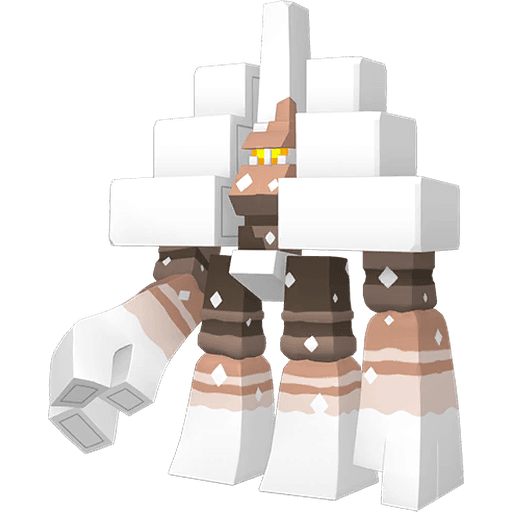
- Bastiodon: Exceptional Defense and Special Defense, but nearly no Speed. Without Sturdy it dies before it can act. With it, Wide Guard goes up in doubles to protect partners from spread moves, or Stealth Rock gets laid in singles. Opponents who want Bastiodon gone before it acts need two actions they rarely have.
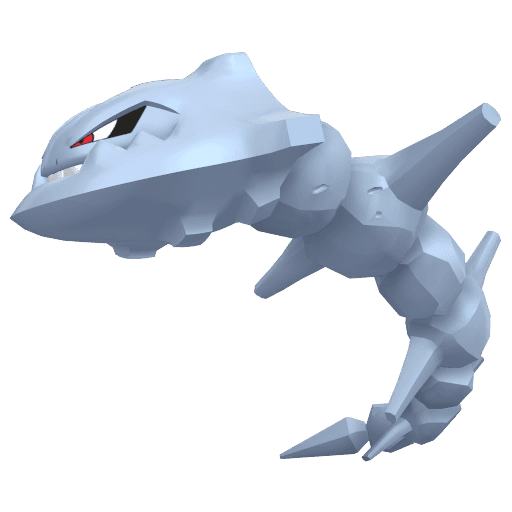
- Steelix: In doubles, Earthquake hits all adjacent targets including allies, which creates a self-damage problem. Sturdy lets Steelix absorb a Water or Fire hit that would otherwise one-shot it, fire off EQ that turn, and rely on a partner using Wide Guard the next turn to protect from the spread. The synergy is tight.
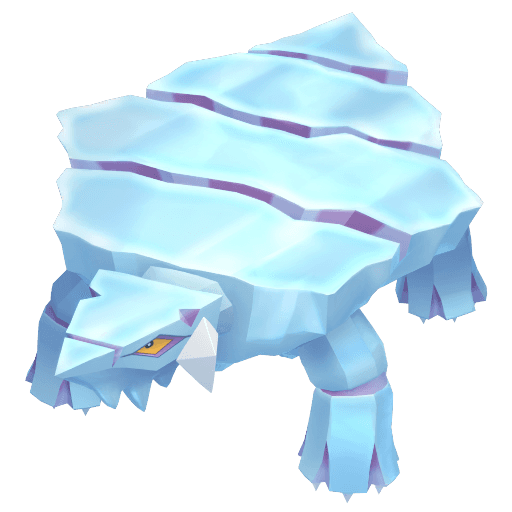
- Avalugg: Ice typing means Fire, Fighting, Steel, and Rock all land super-effective. Its base 184 Defense is extraordinary, but none of that matters if a Fire move one-shots it before it acts. Sturdy gives it one guaranteed turn to drop Wide Guard or launch Body Press, turning what would be a liability into a real double's presence.
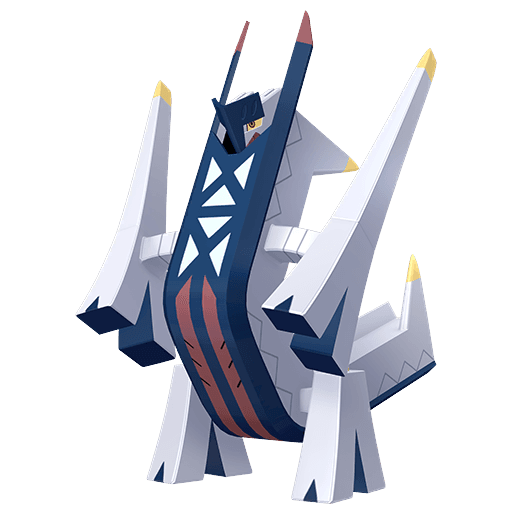
- Aggron: Steel/Rock, uses Sturdy to guarantee one Heavy Slam on a turn where it would otherwise be KO'd by a Ground or Fighting move. Niche but real.
How to use it
Singles turn pattern: Treat the guaranteed action as a known resource, not a lucky break. On the switch-in at full HP, identify whether the opponent will attack immediately. If yes — if they fire a high-power move — you survive at 1 HP and get to act. Classic line with Skarmory: opponent uses Close Combat, Skarmory goes to 1 HP, Skarmory uses Iron Defense. Now opponent either attacks into doubled Defense next turn (bad for them) or switches (you gained a free +2 Defense). Both outcomes favor you.
After surviving at 1 HP, the decision tree is: Can I Roost safely this turn, and will the opponent not be able to one-shot me again next turn? If yes, Roost — you return to full HP, Sturdy resets, and you get another guaranteed survival next time a kill shot comes. If no, pivot out and come back at full HP later. Do not try to stall at 1 HP: end-of-turn damage from Leech Seed, sandstorm, burn, or poison resolves after your action and will kill a 1 HP holder even though Sturdy blocked the original hit.
Doubles turn pattern: Combine Sturdy with redirection. If your partner carries Follow Me or Rage Powder, they can pull attacks off you, letting you set up freely. Alternatively, intentionally tank a kill shot aimed at your partner — you survive at 1 HP, your partner survives entirely, and you both act. The decision rule: if the opponent has spread moves (Rock Slide, Blizzard), prioritize Wide Guard on the turn you survive at 1 HP; if they are focused on one target, have the redirection partner absorb while you move freely.
Hard if-X-then-Y: If the opponent has a multi-hit move user (Rock Blast, Bullet Seed) — do not facetank. The first hit procs Sturdy, every subsequent hit that same turn is unblocked and kills you. Switch or have a partner handle it first. If the opponent has a Mold Breaker user in play, treat your Sturdy mon as having no ability and plan around that accordingly.
Tips & strategy
Cycling the shield: Skarmory with Leftovers passive recovery plus Roost can cycle Sturdy repeatedly across a long game. Turn 1: opponent fires kill shot, Skarmory at 1 HP, Skarmory uses Roost → back to full. Turn 2: opponent fires again, Skarmory at 1 HP, Skarmory uses Iron Defense. Turn 3: opponent fires into +2 Defense, Skarmory uses Body Press. Each cycle your opponent burns two actions making zero net progress while Skarmory builds setup. In a long game, this effectively converts time into free stat stages.
Common-mistake autopsy: The single most frequent Sturdy error is switching in Skarmory or Steelix against a team where the opponent has Excadrill showing — and getting one-shot by Mold Breaker Iron Head. The beginner's mistake is trusting Sturdy without checking the opponent's ability. Mold Breaker is not announced on-screen in the moment; you have to recognize the Pokémon and know its ability before the switch. The fix: before committing a Sturdy mon, scan the opponent's revealed team for anything that carries Mold Breaker, Teravolt, or Turboblaze. If you see Haxorus, Excadrill, Druddigon, or Cranidos line, Sturdy is not your safety net in that matchup.
Four ways opponents break Sturdy — a checklist:
- Mold Breaker / Teravolt / Turboblaze — ability bypass, most complete answer.
- Multi-hit moves (Rock Blast, Bullet Seed, 2–5 hits) — first hit procs, remaining hits kill, all within one turn.
- End-of-turn damage (Leech Seed, sandstorm, burn, poison) — Sturdy only blocks move damage that reduces HP to zero; residual damage at end of turn is not move damage and kills a 1 HP holder cleanly.
- Hazard chip before a hit — if Stealth Rock or spikes damage brings the holder below full HP before the attack lands, Sturdy is off entirely for that hit.
Champions status mechanics reinforce Sturdy's position: Paralysis full-stop is 12.5% (not 25%), Sleep caps at 3 turns, Freeze at 3 turns. Opponents cannot reliably use Thunder Wave or Spore to lock down a Sturdy mon and then slowly chip through the shield over multiple turns while it can't move — status wears off too fast. The result is opponents trend toward direct multi-turn physical pressure to break Sturdy, which is exactly the scenario Sturdy + recovery handles best. If your opponent is trying to slow-play their way through it, the status nerfs mean that plan runs out of time before yours does.