


What it does
Follow Me carries +2 priority and a single, decisive effect: every single-target attack the opponent aims at your partner this turn gets forced onto you instead. Straightforward on paper, but in doubles it's the most important tempo tool in the game.
The core tension in doubles is always the same: setup moves — Tailwind, Swords Dance, Trick Room, Quiver Dance — take a full turn, and the opponent will spend that turn KOing the Pokémon you're trying to protect. Follow Me breaks that loop. Your partner acts freely; all single-target damage funnels into the redirect user.
Priority bracket: +2 is faster than every normal attack, but slower than Fake Out (+3) and Protect (+4). That one number defines every interaction and every limitation.
Critical mechanics:
- Only single-target moves are redirected. Spread moves — Rock Slide, Heat Wave — completely bypass it. Earthquake is especially punishing: it hits both sides of the field including your own ally, and no amount of redirecting stops that.
- Lightning Rod and Storm Drain lose to Follow Me in priority — if both are active, the redirect wins.
- If both Pokémon on the same side use a redirect move in the same turn, the last one to act becomes the target.
- Status moves, self-targeting moves, and multi-target moves are all unaffected.
A worked number to make this concrete: Say your Garchomp opens with Swords Dance while the opponent's Flutter Mane fires Moonblast — which likely KOs Garchomp from full. You absorb that hit with Follow Me. Garchomp is now at +2 Attack. The next turn, that boosted Earthquake deals dramatically more damage than it would have at neutral. You traded one hit on your redirect user for a permanent offensive multiplier on your partner. That's the exchange rate that makes redirect users worth a full team slot even when they deal zero damage themselves.
This move has no application in singles. It is a doubles-exclusive tool, full stop.
Who runs it
Dedicated redirectors — their entire role is support, and every moveslot reinforces it:
- Maushold: roughly 98% Ranked Battles doubles usage paired with Follow Me. The reason is Friend Guard: it stacks on top of the redirect. Single-target moves get pulled to Maushold, and spread moves that bypass the redirect still deal only ×0.75 to your partner thanks to Friend Guard — two layers of protection covering both move types simultaneously. Chople Berry or Focus Sash covers Fighting-type KO threats. Super Fang, Feint, and Taunt give it non-redirect turns that still pressure the opponent meaningfully.
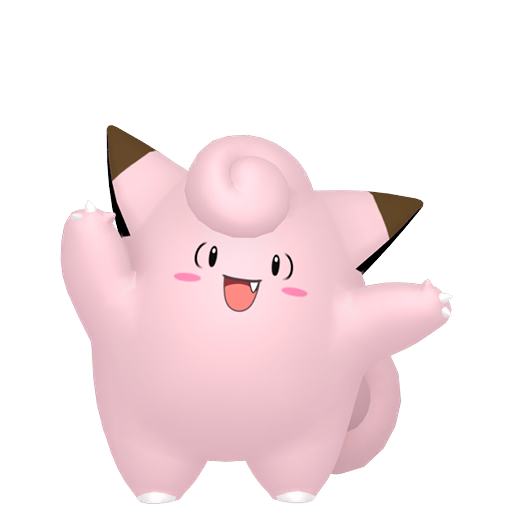
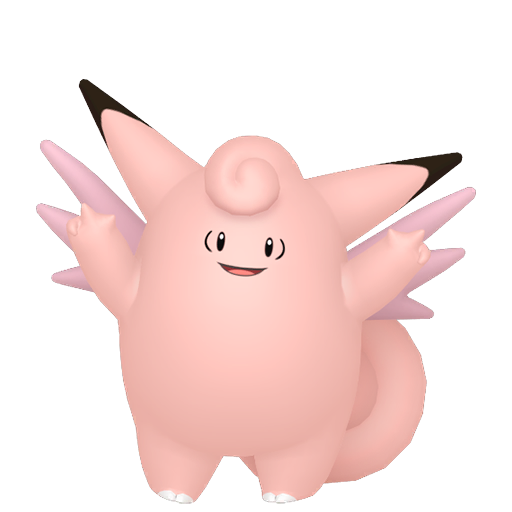
- Clefable: also around 98%. It offers two completely different redirect packages depending on the ability. Unaware ignores the opponent's stat boosts — it doesn't matter if the incoming attack comes from a +2 or +6 attacker; Clefable checks the base damage only. Magic Guard eliminates all chip damage (weather, hazards, item recoil), extending its longevity enormously. Either way, Moonblast is load-bearing — opponents who ignore it entirely pay for that mistake, which prevents the redirect user from being a free sacrifice.
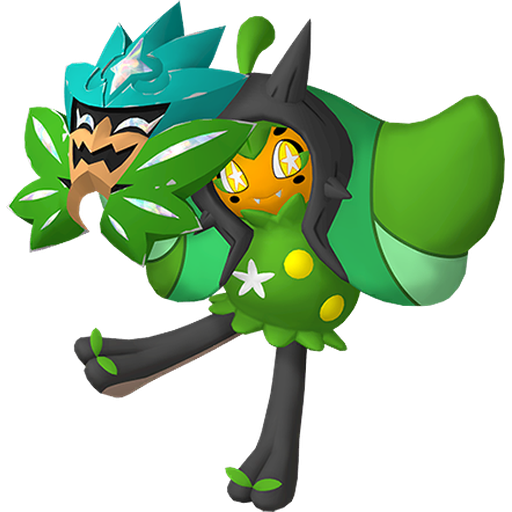
- Sinistcha (Rage Powder variant): pulls double duty as redirector and Trick Room setter, with Matcha Gotcha providing self-sustain. Compresses two support roles into one slot — ideal for slow-team builds that can't afford a dedicated redirector and a dedicated room setter separately.
Offensive redirectors that threaten while supporting:
- Vivillon: Rage Powder (the Grass-type version of Follow Me) combined with Sleep Powder and Compound Eyes to push sleep accuracy high enough to rely on. Turn 1 it redirects, turn 2 it sleeps, turn 3 it redirects again — opponents can never commit fully to ignoring it, which means they have to split their attention.
- Volcarona: Rage Powder covers the partner while Quiver Dance stacks up, then pivots into a full sweep once the boosts are there. One Pokémon doing the work of two.
The best redirect users tend to be Pokémon that opponents want to KO first anyway — "actively taking the hit" fits naturally into their gameplan.
How to use it
Standard turn 1: Redirect user clicks Follow Me, partner sets up or attacks into a now-safe target. This is the bread and butter. Most doubles games start here.
Turn 2 decision tree:
- Opponent targets the redirect user again → re-use Follow Me if HP is comfortable; switch to Protect if a hit could KO you.
- Opponent switches focus to your partner → drop Helping Hand to amplify partner's attack, or Taunt to shut down the opponent's own support play.
- Opponent goes spread moves → Follow Me is useless this turn; pivot to Wide Guard or double Protect.
- Opponent switches in a Pokémon carrying Fake Out → protect the redirect user or swap out before the flinch lands.
The mind-game cycle: Opponents who scouted a Follow Me on turn 1 often predict a repeat on turn 2 and attack the redirect user directly instead. You click Protect on your redirect user — their attack misses, your partner gets another free turn. This Follow Me → Protect loop can realistically cycle 2–3 times against opponents who aren't reading you perfectly, compressing enormous setup value out of a few turns.
Redirect budget: The redirect user's remaining HP is your redirect budget. Every Follow Me you successfully land is one hit absorbed and one free turn banked for your partner. Sitrus Berry and Leftovers extend that budget. Focus Sash guarantees at least one complete redirect regardless of incoming damage. Allocating Stat Points toward HP and Defense extends longevity further — a redirect user that survives three hits has three times the value of one that goes down after one.
Singles vs doubles: You cannot use this move meaningfully in singles. Remove it from your set before climbing the singles ladder or it's a dead slot every game.
Tips & strategy
The hard counter: Fake Out. It sits at +3 priority — one step above Follow Me's +2. Incineroar or Sneasler clicking Fake Out on your redirect user causes a flinch before Follow Me ever resolves, which means your partner eats the attack you were trying to absorb anyway. This is the most common redirect-suppression pattern in competitive doubles. Counter-plays: anticipate the Fake Out turn and have your partner Protect themselves, nullifying the damage regardless; or lead in an order where the redirect user isn't the obvious Fake Out target.
Taunt shuts it down completely. Follow Me is a status move. Once the redirect user is Taunted — whether by Whimsicott's priority Taunt or Incineroar's — they can't execute it at all. That turn, they can only attack or sit idle. The moment you confirm a Taunt has been applied, immediately switch the command to Protect rather than burning the action on a redirect attempt that goes nowhere.
The Earthquake trap — a common-mistake autopsy: Many new players pair Maushold with Garchomp (one of its most popular teammates at roughly 46% co-usage) and run Follow Me to protect Garchomp while it Swords Dances. The opponent earthquakes. Follow Me does nothing — Earthquake hits the whole field, including Maushold and Garchomp simultaneously. The beginner instinct is to just click Follow Me anyway because "we always redirect." The fix: the turn Garchomp uses Earthquake, Maushold clicks Protect, not Follow Me. This lets Garchomp earthquake safely without clipping its own teammate. Recognizing which turns Follow Me is the right call versus which turns it's actively harmful is a major doubles skill checkpoint.
The spread-move exception: Against a team running primarily spread moves — double Rock Slide, Heat Wave, Glacial Lance — Follow Me provides essentially no protection. Opponents don't need to click single-target moves. If you're identifying this pattern on team preview, Wide Guard is a stronger defensive option than Follow Me for that matchup specifically. Strong redirect users recognize when their signature tool is being outplayed and switch roles mid-game rather than committing to a losing pattern.