



What it does
Muscle Band multiplies the power of every physical move the holder uses by 1.1, unconditionally, from turn one to the final hit. No activation, no lock, no self-damage.
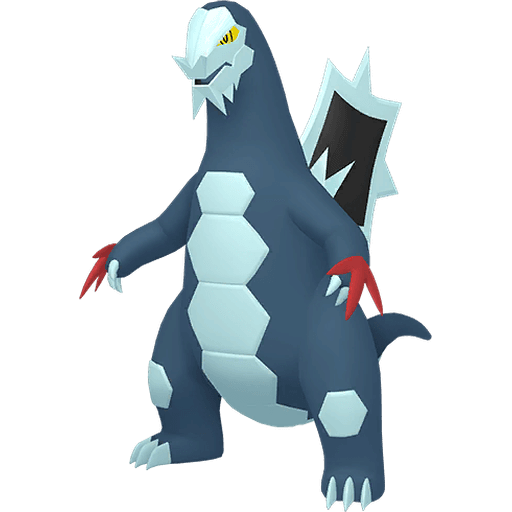
A worked number: take Garchomp using Earthquake at Lv50 under Champions' Stat Points system — 66 points total, capped at 32 per stat. With Attack maxed at 32 points and a boosting nature, the panel lands around 161. Against a target with roughly 95 base Defense (like a standard Incineroar), EQ at base power 100 produces a damage range across the 85–100% sixteen-step spread:
- Bare: low roll ~62%, high roll ~73% of target's HP
- With Muscle Band (×1.1): low roll ~69%, high roll ~80%
The scenario where this matters: without the band, only the highest rolls guarantee a two-hit KO. With it, even the lowest roll does. That's what a ×1.1 multiplier does at the margins — it converts "might need three hits" into "definitely two hits." The multiplier doesn't look impressive on paper; its value lives at the KO threshold, not in the headline number.
Three-way item comparison:
- Choice Band (×1.5): largest multiplier, locks your move. Opponents read the lock and pivot freely to immune switch-ins, costing you an entire action.
- Life Orb (×1.3): flexible and strong, but drains 10% HP per hit. On a frail attacker or in an attrition game, that bleeds out fast.
- Muscle Band (×1.1): smallest boost, zero cost. The correct call when move flexibility or staying power matters more than raw ceiling.
Who runs it
The core requirement: a physically oriented Pokémon with a wide movepool that actively uses multiple moves per game and has no higher-priority item need.
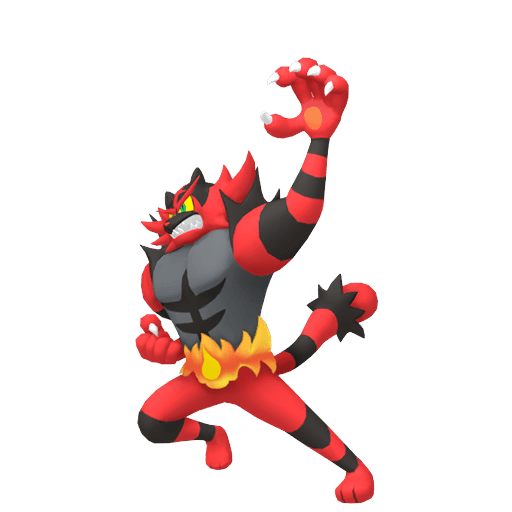
Incineroar: the textbook case. Its job in a match involves Fake Out on turn one, Knock Off for item removal, Flare Blitz as the primary damage move, and Close Combat against Steel types. All four get used in a real game. Choice Band locking any one of these is catastrophic to the support role; Life Orb stacks with Flare Blitz's recoil to bleed it down quickly. Muscle Band adds consistent damage to all four and lets Incineroar last into turns 6, 7, 8 where Band users often can't.
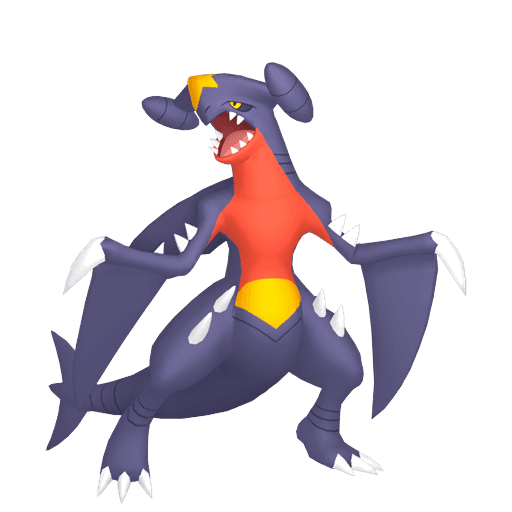
Garchomp: in doubles, Earthquake targeting both opponents already comes in at ×0.75 per target due to spread reduction. Muscle Band's ×1.1 brings that to 0.75 × 1.1 = 0.825, recovering roughly a third of the spread loss. In singles, the Earthquake and Dragon Claw two-move rotation doesn't need to be locked — Muscle Band gives a cleaner, safer option than committing to Choice Band.
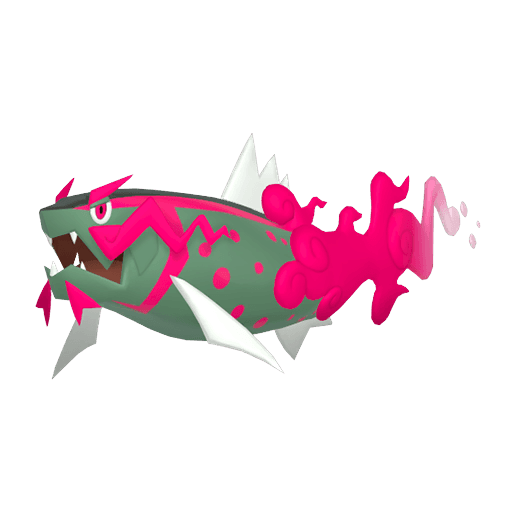
Annihilape: Rage Fist starts at base power 50 and gains 50 per hit taken, growing to 100, 150, and beyond. The strategy is "stay in, get hit, hit harder." Life Orb directly undermines that by adding a self-damage drain on top of the hits Annihilape is already eating. Muscle Band contributes ×1.1 to every stage of the Rage Fist power curve without shortening its lifespan.
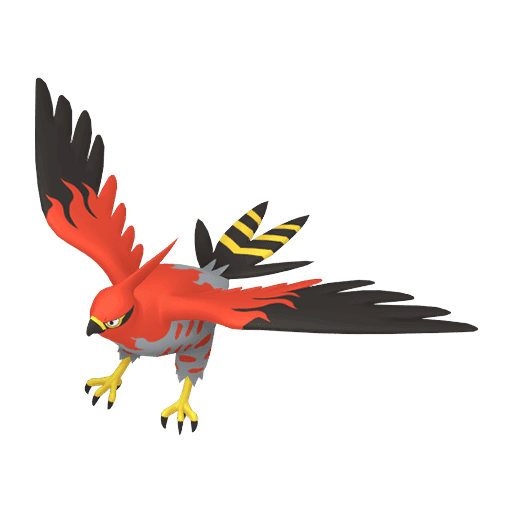
Urshifu (singles-oriented): Wicked Blow is a guaranteed critical hit that ignores screens. Muscle Band raises the damage floor on every single use. The reason to skip Choice Band here is situational — sometimes you need Close Combat against a specific switch-in rather than fishing for another Wicked Blow.
Conkeldurr, Heracross (non-Mega lines): Fighting-type workhorses that need to rotate between Mach Punch, Drain Punch, Rock Slide, and Knock Off depending on the matchup. In long singles games, Muscle Band outperforms Choice Band because the flexibility is always exercised.
Mega note: Pokémon using Mega Evolution via the Omni Ring must hold their Mega Stone, so the item slot is taken. Muscle Band is a tool for the other physical attackers on the team — it doesn't compete with Mega slots at all.
How to use it
Singles turn rhythm: Muscle Band requires no setup. You attack, it works. If the opponent brings in an Intimidate user to drop your Attack one stage, Muscle Band's ×1.1 still applies to the reduced panel — the percentage boost is independent of absolute level. If the opponent hard-switches to a resist or immunity, you simply click the correct move. No Choice Band punishment, no wasted turn. The item is invisible to the opponent's in-game reads in a way that Band never is — they can't exploit a "lock" that doesn't exist.
Doubles turn pattern: classic two-step — turn one, Incineroar uses Fake Out to flinch the most immediate threat (Muscle Band contributes; Fake Out is physical). Turn two, Flare Blitz or Knock Off hits the actual damage target, and the ×1.1 applies in full. Meanwhile a partner's spread Earthquake also benefits. The decision pivot: if you assess the game state as "I can't one-shot this turn, but chip + follow-up next turn works," Muscle Band's clean per-turn contribution maps better to that plan than Choice Band's all-in ceiling.
HP management across the game: Champions doubles games often run 5–8 turns. Five Life Orb attacks = 50% HP gone before any opponent damage. Five Muscle Band attacks = same HP as turn one. When Incineroar is also eating Flare Blitz recoil, that difference between "still at 60%" and "already at 10%" can be the entire game in the last exchange.
Status interaction: Champions paralysis only procs 12.5% of the time; sleep caps at 3 turns; freeze thaws at 25% per turn with a 3-turn ceiling. A Muscle Band user sitting at comfortable HP doesn't compound status with self-damage — unlike Life Orb, where a burned physical attacker is bleeding from two sources simultaneously. Muscle Band keeps the self-inflicted damage column at zero.
Tips & strategy
Multiplier stacking: Muscle Band applies as a held-item modifier in the damage formula, independently of STAB (×1.5), terrain (×1.3/×1.5), and weather. They all multiply together — no "which one gets applied first" concern, no interaction edge cases.
Common mistake (beginner autopsy): equipping Muscle Band on a sweeper whose entire gameplan is a single high-power hit. Suppose you're running Garchomp with the explicit intent of clicking Earthquake once, cleaning up, and immediately switching. In that scenario, Choice Band's ×1.5 is strictly better than Muscle Band's ×1.1 — you're never using a second move, so the "flexibility" advantage costs you 0.4 of a multiplier for nothing. The fix: ask yourself during team building, "how many different moves will this Pokémon actually use in a single game?" If the answer is one, Choice Band. If the answer is two or more, Muscle Band earns its keep. Many new players gravitate to Muscle Band because it "feels safe" without running the comparison — but on a dedicated one-move wallbreaker, safe is actually weaker.
What shuts it down — Intimidate: switching an Intimidate user into a Muscle Band attacker cuts its Attack by one stage. Muscle Band's ×1.1 partially offsets the drop in raw output, but the net damage is still meaningfully lower than a pre-Intimidate attack. Two Intimidate switch-ins across a game (entirely possible in doubles where Incineroar is common on both sides) can effectively neutralize the item's contribution. Unlike Choice Band, this doesn't open a move-lock read — but it does compress the damage ceiling significantly.
Rocky Helmet as the counter item: contact moves against a Rocky Helmet user deal 1/8 recoil to the attacker. Muscle Band users are overwhelmingly contact-move dependent — Close Combat, Flare Blitz, Knock Off, Wicked Blow all make contact. A Rocky Helmet on the opponent's tanky pivot turns each Muscle Band attack into an HP trade that the band user didn't budget for. Muscle Band provides no defensive benefit, so this exchange only goes one way. Scouting for Rocky Helmet — particularly on Ferrothorn, Corviknight, or defensive pivots — and adjusting to non-contact moves where available is the counter-play.
Hard exception — Fur Coat: Fur Coat halves all physical damage received. Muscle Band's ×1.1 still stacks independently, but the final output is still halved. No amount of physical item optimization breaks through a Fur Coat wall efficiently. Recognizing these matchups and pivoting to special coverage or a different attacker is more valuable than optimizing the held item — this is one case where the band is simply the wrong tool, not an insufficient version of the right one.