

What it does
Solar Power does two things simultaneously in harsh sunlight: the holder's Special Attack is multiplied by 1.5, and the holder loses 1/8 of its max HP at the end of each turn. You cannot have one without the other.
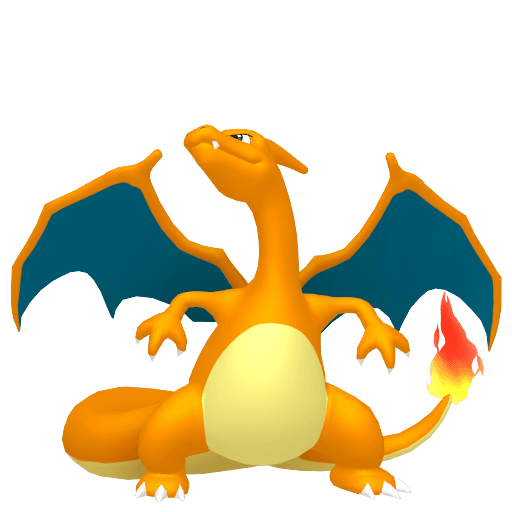
The offensive number is significant. At base 109 Special Attack, Charizard effectively operates around 163 SpA under Solar Power — close to Pokémon that sit at base 150 or higher by nature. Fire Blast in sun also picks up the ×1.5 weather bonus, so the combined multipliers push its effective output to near double baseline. Solar Beam skips its charge turn under sun entirely, so the coverage move that normally costs a full turn lands immediately.
The HP drain is the honest cost. In Lv50 standard play, a full-health Charizard is around 155 HP. One-eighth per turn is roughly 19–20 HP. After four turns of Solar Power drain alone, you've lost about half your health — and that's before factoring in opponent damage. Add Life Orb and the numbers get steep fast: Solar Power takes 1/8, Life Orb takes 1/10, together that's nearly 23% of max HP per turn. Charizard is not a tank. The clock is real.
Harsh sunlight is required: Sunny Day, Drought, or Orichalcum Pulse. Ambient sun-adjacent states don't trigger it.
Who runs it
Charizard (87%) is the unambiguous main user. That percentage isn't a niche build — it's what Charizard does in Champions. Its 109 base SpA, moveset breadth (Fire Blast, Flamethrower, Solar Beam, Dragon Pulse, Focus Blast), and Fire/Flying typing align naturally with a sun-centered team structure. Fire Blast with the sun and Solar Power multiplicative stacks deals damage that outspeeds many defensive benchmarks. Solar Beam covers the Ground and Water types that would otherwise wall it cold.
Mega Charizard Y deserves specific mention. Charizardite Y through Mega Evolution gives it Drought on entry — it sets its own sun, no team support required. Post-evolution Special Attack rises from 109 to 159. That 159 under Solar Power's ×1.5 hits around 238. The Solar Power HP drain still applies every turn. Mega Charizard Y's HP pool is actually lower relative to the damage it deals, so the clock is even tighter. One thing worth noting: Drought fires when Mega Charizard Y enters the field; Solar Power's ×1.5 bonus then applies from the same turn onward.
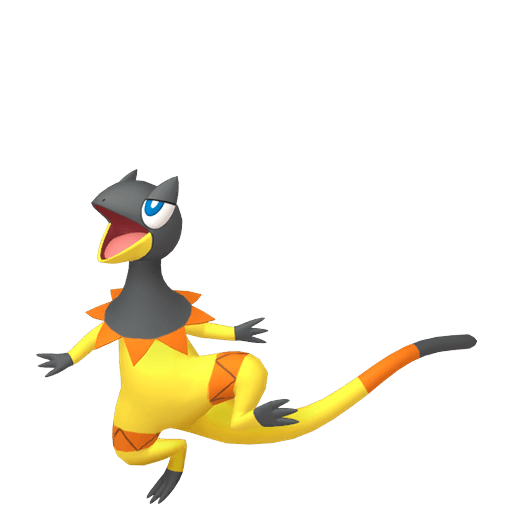
Heliolisk (25%) also runs Solar Power. Electric/Normal typing, base 109 SpA. In sun, Solar Power's ×1.5 is the direct benefit — unlike Charizard, Heliolisk's Electric moves don't pick up a weather multiplier, so it's working with a single ×1.5 rather than stacked multipliers. At 25%, it's a secondary attacker in sun compositions, not the main win condition.
How to use it
Solar Power is completely inert outside sun. No harsh sunlight, no bonus — you just have a 109 SpA attacker bleeding 1/8 HP per turn for no reason. The entire gameplan requires sunlight to be active and to stay active.
Sun-setting paths:
- Drought support: Torkoal is the standard partner in Champions doubles — brings Drought on entry, has enough physical bulk to stay on the field, and combines with Charizard's Fire output cleanly.
- Mega Charizard Y: Brings its own sun via Drought post-Mega Evolution. No additional support needed.
- Sunny Day: Manual setup, costs a turn, vulnerable to being disrupted before it resolves.
Once sun is up, the gameplan is speed over sustain. Every turn is burning HP — you're not here to play a long game. Prioritize the targets that threaten your highest-damage windows. If a single target requires three turns to knock out, your Charizard will be in dangerous HP range by the time it finishes.
Fire Blast is the primary attack, but its 85% accuracy is relevant. A miss at the wrong moment doesn't just waste a turn — it narrows your safe HP window. Flamethrower's 100% accuracy is worth considering if you can afford the power tradeoff in a specific matchup.
Tips & strategy
Do the health math before the first turn. In team preview, rough-estimate how many turns your Charizard can sustain Solar Power drain before it's in knockdown range. Four turns of Solar Power alone costs roughly 50% HP. If you're also running Life Orb, you have maybe two full turns before you're under 50% HP from self-damage alone. Know this going in.
Weather wars are the primary risk. Rain, sand, or snow can erase your sun mid-match. Solar Power instantly loses its bonus, and the HP drain disappears too — but the damage you've already taken doesn't come back. If the opposing team has a weather setter, identify it in team preview and either threaten to knock it out before it sets, or bring a backup sun source.
Life Orb stacking is high-risk, high-reward. ×1.5 from Solar Power, ×1.3 from Life Orb, and the sun's ×1.5 on Fire-type moves — the three layers stack into damage numbers that can one-shot things that shouldn't be one-shotted. But the combined drain (1/8 + 1/10 per turn) means you're at below 50% HP in two turns. This is a 'two-turn burst and switch' strategy, not a sustained attacker strategy.
Solar Beam's free charge in sun changes the coverage math. Water-type Pokémon are the natural answer to a Fire attacker. In sun, Solar Beam hits them without the normal setup cost — it's 120 base power, multiplied by Solar Power's ×1.5 SpA. That's the swing move that makes a sun Charizard genuinely threatening across types that would otherwise check it.