
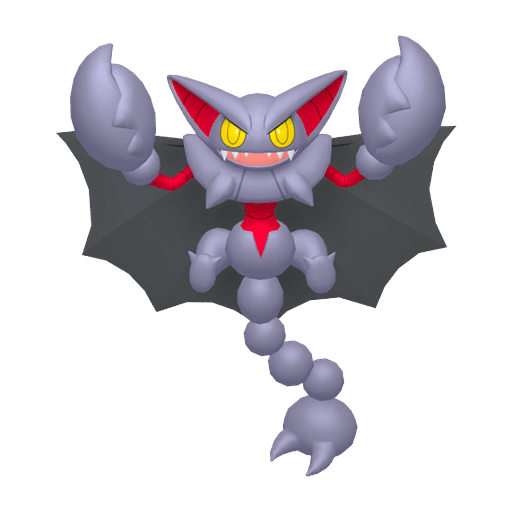
What it does
Poison Heal replaces the damage from poison with recovery: 1/8 of max HP restored each turn when the holder is poisoned or badly poisoned. On Gliscor at full HP — around 307 — that's roughly 38 HP per turn, more than most passive recovery items.
The secondary effect matters just as much: a Pokémon already carrying a status condition can't receive another one. Once Gliscor is poisoned, Will-O-Wisp, Thunder Wave, and Spore all bounce off because the status slot is already taken.
Who runs it
Gliscor at 3% is the only Champions user. It's low partly because Gliscor's Ground/Flying typing makes it immune to Poison-type moves in general — opponents can't poison it through normal means anyway, so the ability rarely triggers naturally. To actually use Poison Heal in practice, you need Toxic Orb.
You might wonder: if Gliscor is Poison-immune, how does Toxic Orb work? Because the orb directly writes the badly-poisoned status onto the holder at the end of each turn — it bypasses the type-immunity check entirely. That's the mechanic that makes this combination functional.
How to use it
Toxic Orb is the required pairing. It triggers at the end of turn one, so from turn two onward Gliscor is healing every turn and can't be statused by the opponent. The standard moveset around this: Protect to bank a free recovery turn, Substitute to trade HP for a blocker, Earthquake for damage, and Knock Off to strip items.
Tips & strategy
The actual payoff here is turning Gliscor into an attrition threat. Opponents who don't have the raw damage to KO it will watch it slowly recover while their status options do nothing. It's especially annoying in single battles where every turn of chip adds up.
At 3% in Champions, this isn't the default Gliscor build — most teams don't need a slow attrition piece. But if your squad wants a status-immune ground-type pivot that gets harder to remove the longer the game goes, this is the way to run it.