






What it does
Ice Body activates during hail or snow weather, restoring 1/16 of max HP at the end of each turn. The holder is also fully immune to hail chip damage — though Ice-type Pokémon already have that immunity, so Ice Body just adds the recovery on top.
1/16 per turn is roughly 9–10 HP per turn for a Lv50 Pokémon with around 150 HP. That's not enough to independently shrug off attacks, but in slow attrition games it shifts KO thresholds. A move that would have KO'd at the end of the turn might land just short of KO range after the tick. Over several turns, a Pokémon with Ice Body can outlast a fight that should have been over.
The ability is supportive by nature — it doesn't deal damage, doesn't boost stats. Its entire value is survivability in prolonged fights under the right weather.
Who runs it
Mr. Rime: 40% Ice Body usage in Champions data, highest of this group. 110 Sp. Atk lets it contribute offensively in snow teams while Ice Body keeps HP from ticking down. Solid support + offense hybrid.
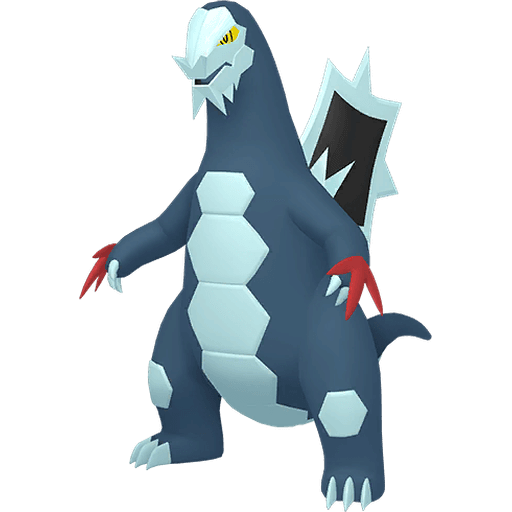
Avalugg: 20% usage. 184 base Defense is enormous — combined with Ice Body's passive recovery in snow, it becomes a physical wall that's genuinely difficult to chip down through physical moves alone. Special moves walk past the Defense; 46 Sp. Def is its clear weakness.
Glaceon: 18% usage. 130 Sp. Atk is the highest in this group — Ice Body is the survival support that keeps it healthy enough to keep firing. Offense first, Ice Body as the sustain layer.
Glalie: 6%, with Mega Evolution as an option to transform its stats. Ice Body is its standard-form snow team contribution.
How to use it
Ice Body requires a snow or hail setter. Get a Pokémon with Snowscape or a snow-triggering ability into play first, then bring in your Ice Body holder to benefit from each turn's recovery.
Attrition logic: snow teams aren't built to burst. They accumulate advantages — Slush Rush Speed doubling, Snow Cloak evasion, Ice Body HP recovery — that compound over multiple turns. Ice Body holders contribute to the HP attrition side of that equation.
In matchups where the opponent is chipping with Leech Seed or status damage, Ice Body's recovery partially cancels the drain. That can flip a war of attrition that Ice Body users would otherwise lose on HP alone.
Tips & strategy
Weather reliance is the hard dependency: Ice Body stops working the instant the weather changes. A sun setter, a sand setter, any weather override ends the recovery. Snow teams need weatherrebuilding ability if the other side changes conditions.
KO threshold math: 1/16 recovery changes the math on close-call KOs. If your opponent calculated they needed exactly two hits to KO your Avalugg but didn't account for Ice Body, the second hit falls short. That extra turn is a real action the opponent didn't plan for.
Pairing with Slush Rush: Snow teams typically run Slush Rush Speed doublers alongside Ice Body tanks. The roles are different — Ice Body holds the line while Slush Rush users put out offense under doubled Speed. They complement rather than overlap.
Special Defense gaps: Avalugg at 46 Sp. Def and Glalie at 80 are both easily targeted by special moves. Ice Body recovery cannot fix structural Sp. Def weakness. Teams running these Pokémon need a separate answer to special attackers.