
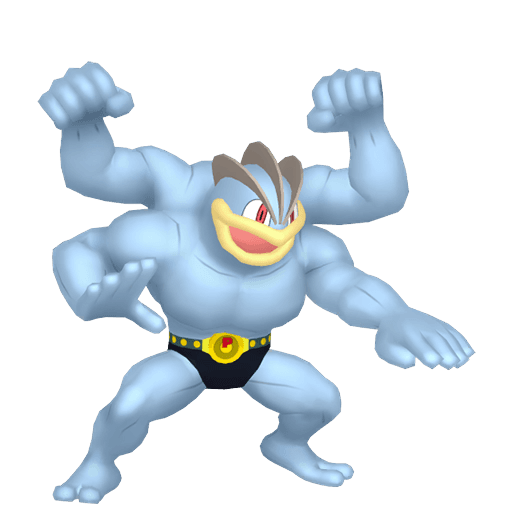
What it does
Guts raises the holder's Attack by 1.5× whenever it carries a non-volatile status condition (burn, poison, toxic poison, paralysis, sleep, or freeze). The critical fine print: burn's Attack penalty is completely suppressed, so you get a clean 1.5× multiplier — not the 1.5 × 0.5 net loss you'd normally expect from burn.
Run a concrete number to feel the difference. Conkeldurr with 140 base Attack lands around 192 Attack at Lv50 with full IVs and a solid Stat Points spread. Guts active pushes that to roughly 288 — a tier that most physical sweepers need two Swords Dance boosts to approach, and Guts costs zero setup turns. Compare that to what burn normally does: a non-Guts physical attacker at 192 Attack gets cut to 96 by the burn debuff. Your opponent used Will-O-Wisp expecting to halve your damage and instead handed you a 50% increase over your unboosted stat. That's the core pitch.
Under Champions rules, status is generally weaker than in standard play — paralysis full-stop falls to 12.5%, sleep caps at 3 turns, freeze adds a 3-turn cap with 25% self-thaw per turn. Those nerfs make status less threatening to normal Pokémon, but Will-O-Wisp still appears on a wide range of physical-support builds. Guts is the hardest counter to that entire line.
Who runs it
Guts wants a high base Attack floor and enough bulk to stay on the field long enough to cash the boost.
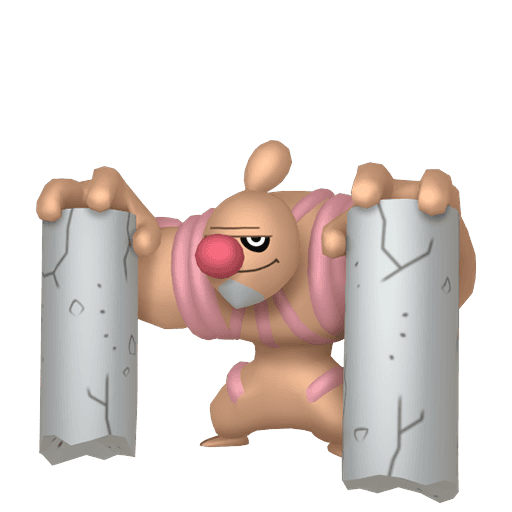
Conkeldurr: The defining carrier. 140 base Attack, Guts as its hidden ability, Flame Orb for guaranteed activation at end of turn 1. Drain Punch then hits for boosted damage and recovers HP in the same action — the sustain loop offsets much of the orb chip and lets it stay relevant deep into a game. Works in both singles and doubles.
Hariyama: 144 base HP is one of the highest in the game. Massive physical bulk means it can absorb orb damage across many turns while hitting back hard. Best thought of as a slow wallbreaker that outlasts rather than outruns — switch it in to absorb a status move, then grind.
Ursaring: 130 base Attack. The Guts + Facade duo lives here. Under status, Facade doubles from 70 to 140 base power; multiply by the 1.5× Attack bonus and you have a Normal-type hit that clears almost any target not immune to the type. Straightforward to pilot and brutally effective in the right matchup.
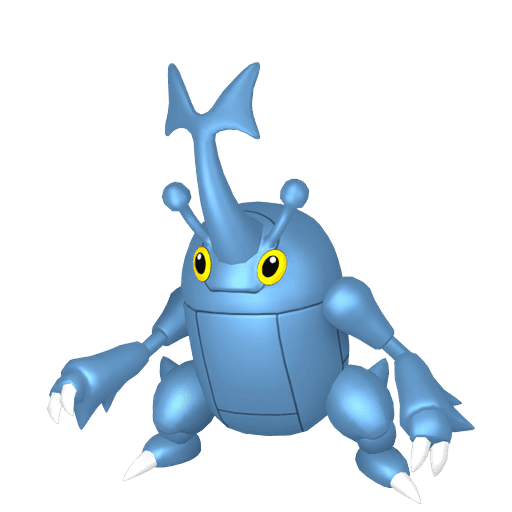
Heracross: Base form with Guts + Flame Orb threatens with Close Combat and Megahorn at boosted Attack. Key caveat: Mega Evolution via Omni Ring and Mega Stone replaces the ability, so Guts is a base-form-only commitment. You cannot Mega-evolve and keep it.
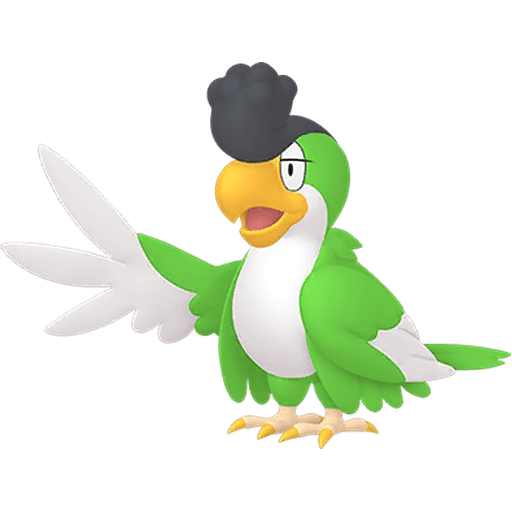
Swellow: A different profile — 125 base Speed instead of raw bulk. Flame Orb + Guts feeds into a fast Brave Bird / Facade offense rather than a sustained grind. Lower ceiling than Conkeldurr but operates on a completely different speed tier.
How to use it
Proactive orb activation:
Standard pattern: turn 1, the orb triggers at end of turn (inflicting burn or toxic); from turn 2 onward, Attack is boosted. If you predict a hit on turn 1 that would deal heavy damage, use Protect — the orb still triggers at end of turn, you take no damage, and you're fully boosted starting turn 2 at full HP. You give up one action to bank it.
Flame Orb deals a fixed 1/16 max HP per turn. Toxic Orb starts at 1/16 and escalates by 1/16 each subsequent turn. Cumulative damage is equal through turn 4; starting from turn 5, Toxic Orb has dealt more total damage. Rule of thumb: Flame Orb for short aggressive games (3–4 turns on field), Toxic Orb for extended grinds.
Reactive activation (passive):
The opponent uses Will-O-Wisp or Spore — you eat it and retaliate harder. This requires you to not be holding Lum Berry (see the mistake autopsy below). The risk is scouting: if your opponent correctly identifies your set as a Guts build, they withhold status entirely and try to pressure you another way. The reward when they misread is devastating — they spend a high-value support move and you become a free Attack-boosted attacker.
Singles specifics:
Calculate HP math before you commit to a long grind. Entry hazard chip + orb chip add up fast. At Lv50 Conkeldurr runs roughly 205 HP; Flame Orb costs about 12 HP per turn. With Stealth Rock on top, you're looking at a finite window. Drain Punch partially offsets this — factor it in as a recovery source, not just as damage.
Doubles specifics:
Guts carriers are incompatible with a partner running Misty Terrain or Safeguard — those block status and kill the activation path. Two approaches that do work: first, letting an opponent's stray Will-O-Wisp or spread status move land on your Guts user (the opponent thinks they're hitting your other mon, but they're actually handing you a boost); second, having your own partner deliberately apply status to the Guts user with something like Glare or a Toxic move — costs a partner action but guarantees the trigger on your schedule.
Tips & strategy
Facade synergy:
Under any status condition, Facade doubles from 70 to 140 base power. Layer Guts' 1.5× Attack on top and you have a Normal-type physical hit that consistently outperforms most coverage moves. Ursaring and Swellow are built around this combination. The one hard counter: Ghost types are immune to Normal-type moves and wall Facade completely. Always carry a second coverage move for Ghost matchups — Close Combat, Earthquake, or a Dark/Fighting option depending on the carrier.
What turns Guts off or limits it:
- Intimidate applies at switch-in before any multiplier: it reduces the base Attack that Guts then multiplies. The math still ends up near-neutral (1.5 × 0.67 ≈ 1.0), but back-to-back Intimidate in doubles progressively erodes the advantage. Trade into a partner or force the Intimidate user out if it's being cycled.
- Switching your own Guts mon out wastes orb HP with no offensive output to show for it. Do it when you have to, but recognize the cost.
- Special attackers bypass the Attack boost entirely. When the opponent pivots to a special sweeper against your Guts mon, recognize the counter-pivot and respond accordingly.
- Ghost types immune to Facade are the cleanest counter to the most common Guts offensive tool.
Common mistake autopsy:
The single most frequent error is putting Lum Berry on a Guts user. The thinking is understandable — "I want to eat one status and keep fighting." But Lum Berry cures status the moment it applies, before Guts can activate. The 1.5× boost never appears. Lum Berry and Guts are mutually exclusive by design. If you want recovery, use Sitrus Berry on something else or redesign the set — Lum Berry on a Guts carrier is a slot wasted.
Mega-evolution trap:
Mega Evolution changes the carrier's ability. If you activate Mega Evolution on a Guts user mid-battle, the ability disappears and the status now only costs you HP with no offsetting boost. Decide before teambuilding: Guts strategy means staying in base form all game. There is no timing trick that lets you run both.
Sleep edge case and the absorber gambit:
Sleep triggers Guts, but you cannot act while asleep. Champions caps sleep at 3 turns — in the worst case you have a fully boosted, fully unable-to-move attacker for several turns. One advanced pattern: lead with a Lum Berry user, absorb the opponent's Spore, cure it, burn their PP, then switch to the Guts carrier when the opponent has no second Spore left. You trade a resource (the Lum Berry slot) for guaranteed action on your Guts mon. It's a basic resource-exchange decision, but players who haven't internalized it often give up free sleep turns to the opponent instead.