






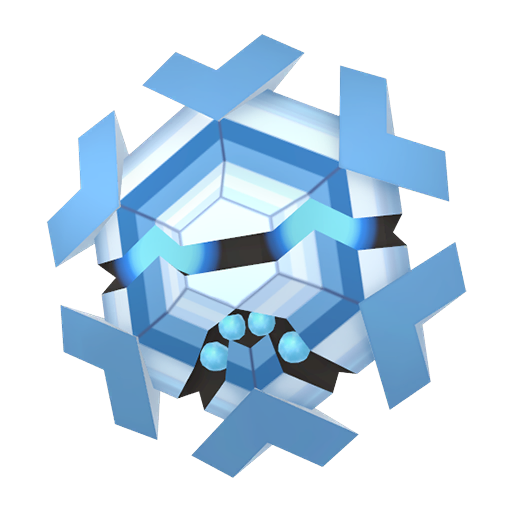

What it does
Aurora Veil raises a dual-sided damage-reducing screen on your side of the field for 5 turns (8 with Light Clay). Snow must be active when you use it — in any other weather, the move simply fails. No partial effect, no fallback.
The math. In singles, the veil multiplies incoming damage by 0.5. In doubles, 0.667. Real example: Garchomp uses Earthquake against Glaceon for a hypothetical 120 base damage. Under Aurora Veil in doubles, that's roughly 80 — already a meaningful survival threshold. Stack in the separate ×1.5 Defense bonus Snow grants to Ice-types (active while Snow Warning or Snowscape is up), and Glaceon's effective physical bulk jumps from 65 Defense toward 97 — two overlapping damage reductions off the same weather source. That synergy is what makes snow teams feel tankier than they look on paper.
Aurora Veil replaces two move slots. In doubles, setting both Reflect and Light Screen separately costs two turns, two move slots, and usually two different Pokémon working in tandem. Aurora Veil compresses that into one turn, one move slot. When your team needs a frail sweeper sheltered immediately, that one-turn difference often determines whether the setup actually lands.
Hard stops — memorize these:
- Critical hits completely ignore screens. The 0.5x modifier disappears; damage is calculated at full.
- Brick Break destroys the veil before damage is dealt — anyone running it has a built-in screen-breaker.
- Defog clears all screens from your side in one action.
Who runs it
Auto-snow setters — the primary users
Abomasnow (Snow Warning) is the textbook one-and-done setter: entry triggers snow, T1 Aurora Veil goes up, no setup overhead. Its moveset usually includes Blizzard (100% accurate in snow) and Giga Drain, so it isn't passive — opponents can't freely ignore it. The cost is a Fire weakness that makes it genuinely dangerous to lead against sun teams. That's where the Occa Berry vs Light Clay decision gets real: Occa Berry keeps it alive through a Fire-type hit turn 1; Light Clay stretches the veil to 8 turns but leaves it much more fragile against Flamethrower or Heat Wave.
Vanilluxe (Snow Warning) is faster and can outpace many threats with Choice Scarf, but the Choice lock means it usually can't click Aurora Veil on the turn it needs to — unless it switches out first to reset the lock. Roughly a third of competitive sets drop Scarf in favor of Light Clay and run Aurora Veil as the primary win condition rather than a wallbreaker.
Manual snow setters
Any Pokémon with Snowscape can run Aurora Veil, but it burns an extra turn building the weather before the veil can go up. That's one more free-attack window for the opponent. The flexibility payoff: you're not spending an ability slot on Snow Warning, which can open other options on the same Pokémon.
The Pokémon that want to hide under it (not set it)
- Kingambit (Supreme Overlord): Decent physical bulk, but special hits can keep it from reliably getting a Swords Dance off. Aurora Veil's doubles coverage lets it set up without eating a special shot that forces it out. Once Kingambit is at +2 behind screens, it's nearly impossible to revenge-kill through normal damage.
- Froslass (Cursed Body): Extremely frail, needs the veil to survive one extra turn for Destiny Bond or Spikes setup to pay off.
- Mixed-type offensive cores that face both physical and special pressure simultaneously — one veil handles both attack vectors, which split screens can't do in a single turn.
How to use it
Standard doubles lead sequence (Abomasnow + Incineroar example):
- T1: Abomasnow uses Aurora Veil (snow already active from Snow Warning on entry); Incineroar uses Fake Out on the opposing lead, flinching one target and cutting its output this turn.
- T2: Screens are up. Incineroar uses Parting Shot to drop the opponent's Attack/Special Attack, then pivots out; your damage-dealer switches in.
- T3+: Sweeper goes to work under the veil.
The decision: when not to set on turn 1
If the opponent leads with a known Taunt user — Whimsicott is the most common — clicking Aurora Veil turn 1 is almost always wrong. Taunt hits first, your setter is blocked from using a status move for several turns, and you've wasted the turn. The fix: either predict the Taunt and deal damage instead, or run Mental Herb on your setter for a one-time Taunt-shrug. Similarly, if the opponent's lead has zero mixed offensive pressure (pure physical or pure special), the veil is covering a threat that doesn't exist on that side — spending the turn attacking is more efficient.
Singles usage: In singles, the ×0.5 reduction is at full strength, which sounds powerful. But the setup sequence burns two full turns: T1 Snowscape, T2 Aurora Veil, core enters T3. Against aggressive opponents, those two turns are open attack windows. Singles Aurora Veil is rewarding when your sweeper is dangerous enough that the opponent can't freely switch in a counter — forcing them to deal with the screen-setter under threat of a real hit.
Weather gets overwritten after setup: A Pelipper or Torkoal switching in will replace your snow — but that does not remove the veil already on the field. The screen keeps counting down its remaining turns regardless of weather. What it does prevent is a second Aurora Veil if the first expires. Tactical implication: get the veil up early, before the weather war escalates, not after it resolves.
Tips & strategy
Common-mistake autopsy: clicking Aurora Veil into a high-crit threat.
The beginner error looks like this: opponent sends out Tyranitar with Stone Edge, a move with a higher-than-normal critical hit rate. You use Aurora Veil T1. Stone Edge scores a crit — roughly 12.5% chance — screen is ignored entirely, and you just sacrificed a turn. The fix: Aurora Veil is an investment, not an obligation. When the opponent has a crit-rate-elevated move user live on the field, consider dealing damage first or forcing a switch before committing to screen setup. A veil you can't reliably benefit from is worse than a turn of actual attacking.
The real Aurora Veil soft counter — preventing snow in the first place.
Weather override after the veil is up doesn't hurt you. Weather override before you use the move makes it fail completely. Against a team you know has Drought or Drizzle waiting in the back, the priority is using Aurora Veil immediately on T1 before the weather war starts. If Torkoal gets a free switch-in on T1 before you act, Aurora Veil fizzles. The counter to that: Protect on T1 to preserve your Snow Warning's weather while scouting, then veil T2.
Brick Break in doubles — narrower than it looks. Brick Break users (Medicham, Hariyama, etc.) can break the veil, but they only hit one target per turn. In doubles, that means one side of your field is unprotected while the other retains the reduction. Route your more important Pokémon away from the Brick Break lane; let it hit whatever can absorb the hit more cleanly.
When Light Clay is actually worth it. 8 turns vs 5 turns only matters if your core needs more than 5 turns to execute its gameplan. If your sweeper typically closes out in 2–3 turns of setup-plus-attack, 5 turns is more than enough — and Occa Berry on Abomasnow keeping it alive through a Fire-type hit is a more reliable source of value than 3 extra veil turns you often don't use.