





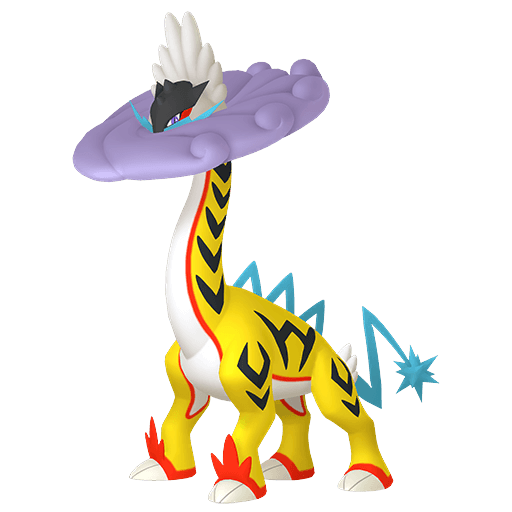
What it does
Protosynthesis activates under two conditions: harsh sunlight (Sunny Day, Drought, Orichalcum Pulse), or the holder carrying Booster Energy. When active, the holder's single highest stat is multiplied by ×1.3 — or ×1.5 if that stat happens to be Speed.
The boost sits outside the stat-stage system entirely. Haze, Clear Smog — neither touches it. That means you're attacking at full boosted output the turn you enter, with no turns invested.
Worked numbers: In Champions, Roaring Moon with base 139 Attack, maxed 32 Stat Points (= 252 EV), 31 IV, Adamant nature hits approximately 210 Attack at Lv50. Protosynthesis ×1.3 brings that to floor(210 × 1.3) = 273 effective Attack — comparable to a permanent Choice Band, minus the move lock. On the Speed side, Flutter Mane with base 135 Speed, maxed, Timid nature reaches 205 Speed. Protosynthesis ×1.5 pushes that to 307 — in unboosted matchups, that number outruns everything in the tier that isn't itself carrying a Speed-tier tool.
Booster Energy is consumed on activation (one-shot), but the boost persists until the Pokémon leaves battle. Switching out and back in without sun gives no boost — the item is gone. The sun-based route checks every turn: overwrite the weather and Protosynthesis deactivates immediately.
Who runs it
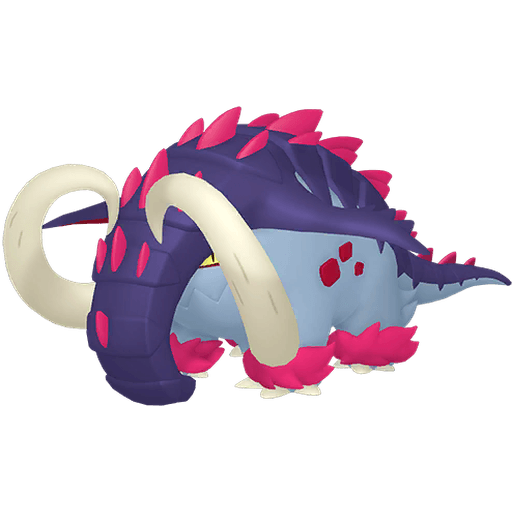
Physical sweepers: Roaring Moon (Dragon/Dark, 139 Atk) and Slither Wing (Bug/Fighting, 135 Atk) are the headliners. Both carry top-tier Attack before any boost; Protosynthesis tips them into a damage range that's difficult to wall without resists stacked on bulk. Roaring Moon presents a specific build decision: its 139 Attack and 119 Speed are both high, and stat-point allocation determines which boost fires. Stack stat points into Attack until it clearly exceeds your Speed stat — you receive ×1.3 Attack. Shift them into Speed until Speed beats Attack — you receive ×1.5 Speed and threaten a completely different part of the speed tier. Neither is universally correct; it depends on what your team needs to outspeed. Great Tusk (Ground/Fighting, 131 Atk) adds physical bulk to this tier, combining Protosynthesis offense with longevity.
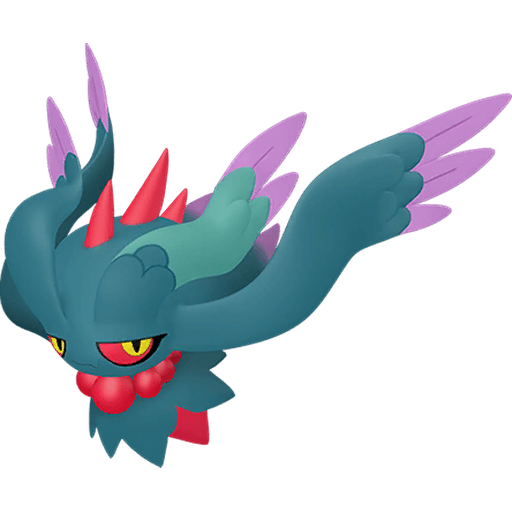
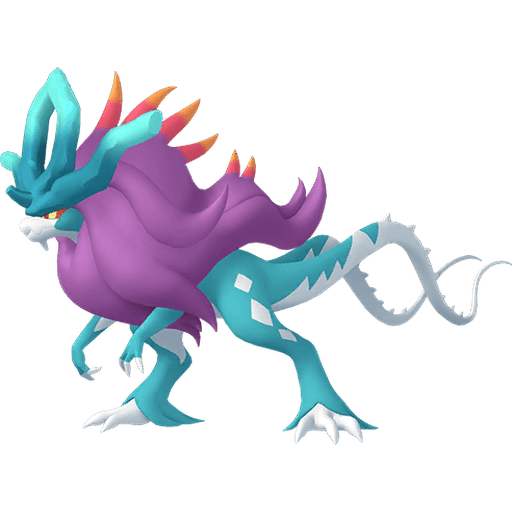
Special sweepers: Flutter Mane (Ghost/Fairy, 135 SpA / 135 Spe) has an important hidden mechanic: when two stats are exactly tied, the game's internal priority order (Atk > Def > SpA > SpD > Spe) resolves the tie — SpA ranks ahead of Spe, so Flutter Mane defaults to the ×1.3 SpA boost unless you invest stat points to push Speed above SpA. Decide at team-build time which you want. Raging Bolt (Dragon/Electric, 137 SpA) and Walking Wake (Water/Dragon, 125 SpA) slot in with different typing coverage.
Speed-control: Scream Tail (Fairy, 121 Spe) naturally has Speed as its highest stat, so it receives ×1.5 without any special investment. It functions less as a sweeper and more as an extremely fast support disruptor — in singles, it carves out unique speed tiers that catch opponents off guard.
In doubles, Booster Energy is the dominant item choice because it removes all weather dependency. In singles, sun teams pair Paradox attackers with Torkoal (Drought) for sustained activation.
How to use it
Booster Energy route (recommended, especially doubles): Switch in, item fires, boost is live that same turn. No prior setup, no partner dependency, no weather fragility. Your first attack comes out at full powered output. At high-level doubles play this is the default line precisely because it removes variables.
Sun route (singles / dedicated sun teams): Lead or pivot into a Drought setter, then bring in your Paradox attacker once sun is up. The dividend: the same sun that activates Protosynthesis also powers up Fire-type moves, removes Solar Beam's charge turn, and chains with other sun beneficiaries — including Mega Evolution via Omni Ring and Mega Stone (e.g. Mega Charizard Y), forming a coherent team-wide weather plan.
Turn pattern decision: Your Paradox attacker enters boosted. In almost all cases: hit immediately. The only valid exception is setting up a stage move — Dragon Dance on Roaring Moon in particular — but only when you're confident the opponent cannot KO or significantly chip you that turn. If the opponent switches in a check, trading a setup turn for damage is usually a loss. In doubles, a partner Fake Out or Follow Me solves this: it suppresses the opponent's most threatening action, handing your Paradox attacker a free setup turn with negligible risk.
Singles note: Roaring Moon with Speed-route Protosynthesis (×1.5) stacking one Dragon Dance afterward stacks speed and attack simultaneously. The combination pushes both stats past normal check thresholds; surviving the setup turn is the only real ask.
Tips & strategy
Beginner autopsy — the "switch out and back in" mistake: Booster Energy is gone the moment it triggers. Switching the Pokémon out and back in without sun in play yields zero boost on reentry. Many new players assume the item auto-refires, then waste a turn and take a hit expecting a boosted retaliation that never comes. The fix: treat Booster Energy Paradox mons as "commit and finish" threats. If you run the sun route instead, make sure you control weather maintenance throughout the game.
Intimidate math — it still hurts, just not as much as you think: Incineroar's Intimidate reduces your Attack one stage (×0.67) after Protosynthesis has already locked in its boost direction. The engine applies them multiplicatively: 210 (maxed Attack) × 1.3 (Protosynthesis) × 0.67 (Intimidate) ≈ 183 effective Attack. Still threatening, but roughly 25% less than you'd expect going in. When calculating whether a Protosynthesis physical sweeper can OHKO through Intimidate, factor this in — the answer changes on bulk benchmarks.
Named counters and what actually works:
- Knock Off before Booster Energy activates (priority or simply moving first) strips the item and kills that activation route entirely. Does nothing to the sun route.
- Cloud Nine (Golduck) and Air Lock suppress weather entirely, cutting off sun-based Protosynthesis. No effect on an already-consumed Booster Energy.
- Weather override (rain, sandstorm, snow) covers the sun route only. On Booster Energy Pokémon, weather is irrelevant post-activation.
- Speed control: Icy Wind, Electroweb, Tailwind for your own side, or simply leading a faster Pokémon and pressing KO. Protosynthesis makes these Pokémon hit extremely hard; it doesn't make them tankier. Identifying the KO window is more reliable than trying to race them.